Monday, October 23, 2017

Basra Governorate’s Petroleum Cluster (Part A)

BACCI-Basra-Governorate-Petroleum-Cluster-PartA-Oct.-2017-Cover


The article “Basra Governorate’s Petroleum Cluster (Part A)” has been initially published by the C.W.C. Group, an energy and infrastructure conference, exhibition and training company

October 23, 2017
LONDON, United Kingdom
INTRODUCTION

The events of the last years have been quite complicated for Iraq because of divisions at the political level, reduced revenues from the sale of crude oil (low oil prices), and the costs of waging a war against the Islamic State of Iraq and Syria (ISIS), which had conquered large swaths of central and western Iraqi territory. Now, thanks to improved results in the war against ISIS, it’s time for Iraq to focus again on developing the country’s struggling economy. In this regard, some months ago, Foreign Minister Ibrahim Al Jaafari declared that Iraq needed a sort of new Marshall Plan, hinting at the American initiative to aid Western Europe after World War II.

At the end of October 2017, the C.W.C. Group, a world-leading events and training producer for the oil, gas and infrastructure industries, will host in Beirut, Lebanon, the Basra Oil Gas and Infrastructure Conference. The conference will be a gathering point for government officials, projects stakeholders, buyers and sellers working in the southern part of Iraq across several industries in three primary business segments: oil and gas, power, and petrochemicals (first segment), infrastructure and construction (second segment), and transport and logistics (third segment).

The timing, the economic topics, and the geographic target of this conference are quite correct. In fact, if, on the one hand, as mentioned above, now, after some positive advances in the war against ISIS, Iraq is obliged to improve and reinforce its economy, on the other hand, it’s almost impossible to develop Iraq’s economy without developing Basra Governorate’s economy.  Basra Governorate, whose capital is the city of Basra (Iraq’s third largest urban center), represents the economic powerhouse of the whole Iraqi state. Last April, Iraq’s Parliament voted unanimously to consider Basra Governorate as Iraq’s economic capital. A few data will clarify this concept.

BACCI-Basra-Governorate-Petroleum-Cluster-PartA-Oct.-2017-1
Map of Basra Governorate — Source: Google Maps

OVERVIEW OF BASRA GOVERNORATE’S ECONOMIC CONDITIONS

Today, Iraq’s economy is the world’s most dependent on oil. Approximately 58 percent of the country’s G.D.P. and 99 percent of its exports are hydrocarbons; oil provides more than 90 percent of government revenues and 80 percent of foreign exchange earnings.

BACCI-Basra-Governorate-Petroleum-Cluster-PartA-Oct.-2017-2
What Did Iraq Export in 2014? — Source: The Atlas of Complexity, Harvard University

In fact, of Iraq’s more than 4.4 million barrels of oil per day (b/d), 85 percent of the barrels are produced under the terms of technical service contracts (T.S.C.s.) by the giant oil fields of southern Iraq. Majnoon, Rumaila, West Qurna (1 & 2), and Zubair are located in Basra Governorate; Halfaya is located in Maysan Governorate. Below there is some additional information regarding Basra Governorate’s giant oil fields.

BACCI-Basra-Governorate-Petroleum-Cluster-PartA-Oct.-2017-3
Basra Governorate’s Giant Oil Fields — Source: A. Bacci’s Elaboration of a Map by The Oil and Gas Year (TOGY)

  • Majnoon — Shell (45%), Petronas (30%), and Iraq's state-run Missan Oil Company (25%). Production: 235,000 b/d. Estimated oil in place: 12,6 billion barrels. A.P.I. gravity: 19 to 33 degrees.

  • Rumaila — BP (47.6%), China National Petroleum Corporation (C.N.P.C., 46.4%), and Iraq’s State Organization for Marketing of Oil (SOMO, 6%). Production: 1.45 million b/d. Estimated oil in place: 17 billion barrels. A.P.I. gravity North Rumaila: 26.3 to 48 degrees. A.P.I. gravity South Rumaila: 12 to 45.9 degrees.

  • West Qurna 1 — Exxon Mobil (33%), PetroChina (25%), Shell (20%), Iraq's state-run Oil Exploration Company (12%) and Pertamina (10%). Production: 470,000 b/d. Estimated oil in place: 8.7 billion barrels. A.P.I. gravity: 22.5 to 46 degrees.

  • West Qurna 2 — Lukoil (75%) and Iraq's state-run Basra Oil Company (B.O.C., 25%). Production: 413,000 b/d. Estimated oil in place: 12.9 billion barrels. A.P.I. gravity: 22.5 to 46 degrees.

  • Zubair — Eni (32.81%), Iraq's state-run Missan Oil Company (25%), Iraq's state-run Basra Oil Company (B.O.C., 23.44%), Korea Gas Corporation (18.75%). Production: 400,000 b/d. Estimated oil in place: 4.5 billion barrels. A.P.I. gravity: 27.5 to 40 degrees.

Unquestionably, the bulk of Iraq’s proven oil reserves is in the south of the country and, in specific, 60 percent of all Iraq’s proven oil reserves should be located in Basra Governorate), while more than 3 million barrels a day of oil are exported from Basra Governorate. Two types of crude oil are exported: Basra Light Oil, which has an A.P.I. gravity of 29.7 degrees and sulfur content at 2.85 percent and Basra Heavy Oil, which has an A.P.I. gravity of 23.7 degrees and sulfur content at 4.12 percent. The Basra Oil Company (B.O.C., previously known as South Oil Company, S.O.C.) has its headquarters in Basra. It’s the national Iraqi company in charge of the oil development in southern Iraq.

As Wood Mackenzie, a U.K. consulting firm, reported, Iraq’s T.S.C.s relating to the southern governorates since 2009 have added 2.3 million b/d (70 percent of the added barrels are growth, while the remaining 30 percent of the barrels are offsetting baseline decline). Indeed, this increase is an important achievement, but Iraq is currently still quite far from its plateau production target (P.P.T.) of 8 million b/d of crude oil production, which has to be achieved primarily through the expansion of the oil fields located in southern Iraq.

BACCI-Basra-Governorate-Petroleum-Cluster-PartA-Oct.-2017-4
The Oil Production of the Oil Fields Located in Basra Governorate — Source: A. Bacci’s Elaboration of a Chart by Wood Mackenzie

One of the reasons for the delay in increasing oil production in southern Iraq is the very slow development of the Common Seawater Supply Project (C.S.S.P.) in Basra Governorate. In practice, to obtain a production increase as high as the one envisaged by the P.P.T., the southern oil fields require substantial increases in natural gas and/or water injection to maintain the reservoir pressure. B.O.C. is undertaking the C.S.S.P., a project that initially should have been able to provide the southern oil fields with around 12 million b/d of desalinated water to reinject into the oil fields. The plan is to treat seawater from the Persian Gulf and to transport it via pipeline to the oil fields. The project is estimated to cost $4 to $6 billion. But this project is not progressing according to the planned timetable. Currently a scaled-down version (2.5 million b/d of water) of the project is in the works.

With reference to natural gas, at the end of 2015, Iraq had total proven natural gas reserves of 3,7 trillion cubic meters of natural gas. Approximately 70 percent of the country’s proven natural gas reserves are associated gas located in southern Iraq. In 2015, Iraq produced 6.1 million tons of oil equivalent of natural gas—this value is expected to more than double by 2021. The gas produced is primarily used for power generation, but around two thirds is still flared. Basra Gas Company (B.G.C.), which is a joint venture between Iraq’s South Gas Company (51 percent), Shell (44 percent), and Mitsubishi (5 percent) was established in 2013 with the specific goal of collecting and treating the until-then-flared gas from Rumaila, West Qurna 1, and Zubair—the cost of this agreement, which will last for 25 years, is $17 billion. This project is the largest flare-reduction program in the world. The processed associated gas is transformed into dry gas for power generation, liquified petroleum gas (L.P.G., i.e., propane and butane) for domestic use, and condensates for road fuels. The company is authorized to export the gas (in the form of liquified natural gas, L.N.G.) once the local demand is satisfied. Basra Governorate will need to build more gas-fired power plants in order to absorb all the produced associated gas.

BACCI-Basra-Governorate-Petroleum-Cluster-PartA-Oct.-2017-5
Source: Basra Gas Company

Basra’s refinery has a nameplate capacity of 210,000 b/d out of something more than 1.1 million b/d in the whole Iraq (including Iraqi Kurdistan). But, according to the U.S. Energy Information Administration (E.I.A.), it is more realistic to assume an effective capacity of 135,000 b/d. There are now plans concerning the construction of a second refinery in Basra with a refining capacity of 300,000 b/d. Several companies have expressed interest in this project.

Iraq, as many other MENA countries, needs to satisfy a relevant increase in the demand for electrical power. Last summer, with temperatures touching 52 Celsius degrees in Basra Governorate, as people used their air-conditioners, demand for electricity soared so consistently that blackouts were quite ordinary. Recently, Japan International Cooperation Agency (JICA) has signed a loan agreement with the Republic of Iraq in Baghdad to provide a Japanese official development assistance (ODA) loan to help Iraq retrofit the Al Hartha Thermal Power Plant (feedstock: gas and oil) in Basra Governorate, which had been built in the 1970s by a Japanese company and had been equipped with four 200 MW units, two of which have not been working since the Fist Gulf War.

So, today, in Basra Governorate electricity is generated by the following power plants:

  • The Al Hartha Thermal Power Plant (feedstock gas and oil, two 200 MW turbines)

  • The Najibiyah Thermal Power Plant (feedstock gas and fuel oil, two 100 MW turbines)

  • The Al Harta Gas Power Plant (six 20.4 MW turbines)

  • The Khor Al Zubair Gas Power Plant (four 63 MW turbines and two 125 MW turbines)

  • The Najibiyah Gas Power Plant (four 125 MW turbines)

  • The Shuaiba-2 Gas Power Plant (two 75 MW turbines)

  • The Rumaila Gas Power Plant (five 292 MW turbines)

And since the beginning of 2016, natural gas from the Majnoon oil field is contributing some fuel to Iraq’s power grid, producing in this way around 300 MW. In addition, Iran will soon supply 5 million cubic meters of natural gas per day via a pipeline to Basra Governorate. The pipeline runs from the city of Ahvaz, the provincial capital of Khuzestan, to Khorramshahr and then to the border between Iran and Iraq.

Indeed, the above data concerning the power plants show that there is some infrastructure to generate electricity, but this infrastructure has to be improved and expanded consistently. An additional problem is that there is not enough natural gas to deliver to the present gas power plants. And this is the reason for the future natural gas imports from Iran into Basra Governorate with the specific goal of feeding gas to the Rumaila Gas Power Plant, the Najibiyah Gas Power Plant, and the Shatt Al Basra Power Plant. The latter is still a project relating to the construction of a gas power plant with 10 turbines capable of producing 1,250 MW.

Additional activity in Basra Governorate is centered around the petrochemical industry. The State Company of Fertilizers (S.C.F.) has capabilities concerning the production of sulfuric acid, ammonia, urea, and ammonia sulfate. The State Company for Petrochemical Industries (S.C.P.I.) is in the business of manufacturing high quality high density polyethylene, low density polyethylene, polyvinyl chloride (P.V.C.), polyethylene master batch (colored and black), polyvinyl chloride compounding, agricultural film, and other chemical products. Finally, Basra Governorate is located in a fertile agricultural region, which produces rice, maize, barley, pearl millet, wheat, and dates and which raises livestock.

Basra Governorate is Iraq’s only access to the sea. The port of Basra is Iraq’s main port, but it doesn’t have deep-water access, which has instead the port of Um Qasr (22 platforms) lying south of the city of Basra on the Khawr az-Zubayr Waterway. The presence of the ports has transformed the governorate in an important center for trade, transportation, and storage.

Al Basrah Oil Terminal (ABOT) and Khawr al ‘AmÄ«yah Oil Terminal (Kaaot) are located 31 miles southeast of the Al-Faw Peninsula in the Persian Gulf. The two loading terminals and three single-point moorings (S.P.M.s) plus a spare buoy, provide the principal point of export for Iraq’s crude oil, but they are operating well below capacity as a consequence of three wars and scarce maintenance. In January 2017, the Ministry of Oil announced that it intended to double the crude loading capacity of Kaaot, which is the smaller terminal of the two, to 1.2 million b/d in order to permit the loading of Suezmax vessels. Instead, ABOT alone, without considering the S.P.M.s can transfer up to 3 million b/d.

BACCI-Basra-Governorate-Petroleum-Cluster-PartA-Oct.-2017-6


The city of Basra also hosts the University of Basra, which is a large public university comprising all the most important types of faculties and some research centers linked to Basra’s economic activities, and Basra International Airport, which is Iraq’s second largest international airport and serves primarily Middle Eastern destinations and some Asian destinations.

The conditions of the general infrastructure in the governorate are poor. These conditions are common across all sectors. In specific, the oil sector infrastructure is still aging as witnessed by the I.O.C.s that returned to Iraq after the first licensing round in 2008-09. Only recently did Iraq obtain some improvements such as expanding onshore pumping and storage infrastructure in the south to increase crude production, expanding offshore loading with capacity doubling to 4.5 million b/d of crude thanks to single-point moorings, building new tie-in pipelines and pipelines to the loading terminals of the Al-Faw Peninsula for the fields West Qurna 2 and Majnoon (Basra Governorate), Halfaya (Maysan Governorate), Missan (Maysan Governorate), Gharraf (Dhi Qar Governorate), and Badra (Wasit Governorate).

Poor infrastructure is a big limit to the economic development of the governorate. In the past, the Basra region had been an important battleground during the Iran-Iraq war and during the two Gulf Wars. All these wars have damaged the economic infrastructure and have left, scattered throughout the region, a host of mines and unexploded ordnance, which, as a result, necessarily slow the economic development of the region. In addition to the three mentioned wars, after the 2003 invasion, the governorate one more time became a center exposed to violence with militia conflicts and resistance acts against the Multinational Force and the new Iraqi government. At that time, both simple criminality and sectarian violence increased. Only after 2008, was it possible to recreate a sort of peaceful environment in the governorate.

The governorate of Basra, but this is a recurrent condition throughout Iraq, is hyper-urbanized with 80 percent of its population (4,7 million of people live in Basra Governorate) living in the few urban centers present in the governorate. In 2017, the metropolitan area of the city of Basra has an estimated population of 2.8 million. Hyperurbanization means a large and growing housing deficit in all the major Iraqi centers, Basra included. This deficit has been compounded by population growth, the pace of urbanization, and the inflows of internally displaced people.

According to both the International Monetary Fund (I.M.F.) and the World Bank, in 2016 Iraq’s per capita G.D.P. was around $4,620 per year. The United Nations estimates that at least 10 million Iraqis need humanitarian aid. Iraq’s 18 governorates are divided in districts and sub-districts. And contrarily to expectations, the sub-districts with the highest poverty rate are in the southern governorates despite the presence under the ground of the hydrocarbon reserves.

Iraqi Minister of Planning Salman al-Jumaili last spring declared that, apart from areas directly touched by the war against ISIS, the last survey in Iraq in early 2015 showed that the level of poverty was 31 percent in the southern provinces, 17 percent in the center, 12 percent in Baghdad, 17 percent in Diyala and Kirkuk, and 13 percent in the Kurdish regions. In practice, the percentage of people living under the poverty line of $2.5 per day in the governorate is higher than the national average.

THE LOGIC BEHIND THE ECONOMIC DEVELOPMENT OF BASRA GOVERNORATE

So, if Basra Governorate doesn’t continue to develop, there will be serious problems throughout the whole Iraq—and the country’s survivability could be at stake. In brief, this southern governorate is the only one that can consistently provide Iraq with the economic resources necessary to the federal government in order to then reconstruct part of the country with the specific goal of assisting the recreation of a fabric of Iraqi small and medium enterprises (S.M.E.s). For instance, before ISIS’s capture, the city of Mosul boasted an interesting S.M.E. fabric capable of producing medicines and medical equipment, sugar, yogurt, clothes and cotton textiles, pre-cast concrete elements, furniture, and leather products.

Indeed, as confirmed by the best textbooks of economics, Iraq should try to diversify its economy. On paper, this goal is always the best outcome because a diversified economy permits a country to have an improved resiliency in the face of difficulties in one specific economic sector. Diversifying a portfolio of investments reduces the implied risk. This concept is true in relations to private investors, companies, and countries as well. And to confirm this point, it’s good to underline that presently, on the basis of Iraq’s current economic structure, low oil prices immediately mean that the federal government will experience a consistent reduction in its revenues, which later on will translate into fiscal budget troubles.

But, is it easy to diversify the economy of a country? The answer is no. Petroleum literature well shows how diversifying an economy primarily relying on the export of commodities is never an easy task. And, if a positive result is obtained, it normally takes several years. Norway, a country in 6th position in June 2016 in the World Bank’s Ease of Doing Business, a business ranking relating to several parameters, shows a still quite unbalanced export sector. And in the Middle East, Saudi Arabia, OPEC’s most important member with around 10 million b/d of crude oil production, has been trying to diversify its economy since the 1970s through 10 development plans, but it has obtained unsatisfying results.

BACCI-Basra-Governorate-Petroleum-Cluster-PartA-Oct.-2017-7
What Did the Saudi Arabia Export in 2014? — Source: The Atlas of Complexity, Harvard University

Iraq’s National Investment Commission (N.I.C.)—the body responsible for all the national policies for investment and the promoter, facilitator, monitor, and policy advisor for investments in Iraq—correctly underlines that Iraq needs a more diversified economy via the increase in the number of Iraqi S.M.E.s. The idea is that more S.M.E.s will enlarge the job market, which in turn will provide the federal government with an enlarged and more stable tax base. And if Iraq wants to increase the number of its S.M.E.s, it has to attract more foreign direct investment (F.D.I.). The problem is, and this is especially true (and quite normal) in a country that is at least partially exiting a conflict, the presence of a high level of corruption.

International oil companies (I.O.C.s) and foreign national oil companies (N.O.C.s) can deal with corruption problems because the former often have deep pockets while the latter have big pockets often coupled with a political agenda. In other words, in their operations, companies with large shoulders can better factor in all the additional costs linked to corruption. But, to an Iraqi investor, the costs and the risks involved in supporting a small or a medium enterprise are too high if they are not at least partially covered by the back-up of F.D.I. On top of this, Iraqi banks don’t easily lend financing resources to local businesses because the local guarantees are insufficient.

Summing up, while the goal of diversifying Iraq’s economy should stay as a long-term goal on the radar of Iraq’s institutions, right now it’s of paramount importance the promotion of the economic development of Basra Governorate. This development of Basra Governorate will then be instrumental in the long-term diversification of Iraq’s economy. This two-step process is necessary especially now that Iraq requires a continuous flow of revenues to redistribute to its young population. In fact, almost 40 percent of the Iraqi population is aged between 0 to 14 years. In summary, if the country won’t be able to provide the young Iraqi citizens who will enter the job market with real jobs, it should at least try to provide them with some economic assistance, which under the current circumstances could only come from the oil revenue.

And, it's then important to understand that, as it has been studied by the World Bank, youth exclusion is probably the main factor favoring youth radicalization and recruitment by militias and violent groups. Most Iraqi youths joined ISIS because they had no realistic life opportunities other than that in order to improve their social standing—most youths earn a week salary of less than $22, while a very basic rent costs around $180 per month.


Monday, September 18, 2017

Are Oil Markets Finally Rebalancing?

BACCI-Are-Oil-Markets-Finally-Rebalancing-Sept.-2017

I wrote the article “Are Oil Markets Finally Rebalancing?” as an email in response to Ms. Kamila Aliyeva’s interesting questions concerning the present state of the oil markets. Ms. Aliyeva, a business journalist, then introduced my emailed comments into her article “Expert: Gradual Decline in Oil Inventories Should Result in More Balanced Markets in 2018,” which was published by Azernews, an English-language Azerbaijani newspaper, first, on September 18, on its online edition and then, on September 22, in its paper edition.   

BACCI-Are-Oil-Markets-Finally-Rebalancing-Sept.-2017-1

September 18, 2017

LONDON — On September 5, Russia and Saudi Arabia discussed in St. Petersburg, Russia, about the possibility of extending for a second time the oil output-cut deal between OPEC and non-OPEC producers negotiated in November 2016. This meeting on the Russian soil was one of the preparatory meetings that oil producers must conduct if they want to try to implement a unified strategy aiming at freezing oil production levels. In addition, considering Russia’s position as the world’s largest producer with almost 11 million bpd, thinking of an oil strategy confined to OPEC members alone would not be a recipe to success.

It is certain that at the end of next November, when there will OPEC’s 173rd ordinary meeting and another meeting including OPEC and non-OPEC members, the main topic will be what petroleum policy these countries want to implement after the expiration in March 2018 of the extension of the 1.8 million bpd output cut. This first extension was agreed on last May in Vienna by OPEC and 10 non-member countries—among them there was Russia. The real problem is that defining a working strategy suitable for all the involved oil-producing countries is always very difficult.

The common denominator among all these countries is their fiscal budget’s strong dependence on their oil revenues. But apart from this, these countries have different histories, which translate into different economic and political agendas. On top of this, the difficult cooperation among OPEC members is linked to the intense political struggle between Saudi Arabia and Iran for regional influence. Under the present deal, Iran obtained an exemption to slightly raise its output, which had been reduced by years of Western sanctions. In August, Iran pumped 3.82 million bpd of crude oil.

Until a few weeks ago, with still oversupplied oil markets, it seemed that a production freeze would be not very useful because OPEC production rose to 32.8 million bpd in July (highest value in 2017)—Nigeria, an OPEC member under exemption from output curbs, pumped more crude oil. In practice, the only valid solution was a consistent production cut, which indeed was politically very difficult to agree on.      

Now, according to the latest data from the International Energy Agency (I.E.A.), oil demand is increasing faster than previously thought. In practice, the I.E.A. states that oil demand will grow by 1.6 million bpd (or 1.7 percent) in 2017. This means that oil markets are in the process of rebalancing because finally inventories are decreasing. And, although in a feeble manner, markets are reentering a backwardation phase. In addition, in August OPEC production was 79,000 bpd less than July’s production.    

Now, the next two months and a half, which lead to OPEC’s November 30 meeting, will be crucial to understand what petroleum policy the oil-producing countries will apply after March 2018. In specific, if the present, and still in its infancy, rebalancing of the oil markets continues, it could really save oil producers from being forced to implement a production cut larger than the present one, which is worth 1.8 million bpd.

Considering the current possible sustained transition toward a backwardation phase, predicting where the oil prices will be in 2018 is very difficult. Commodity price movements depend on inventories (cyclical component linked to short-term supply and demand shocks) and marginal costs (structural component linked to the long-term impact of technology, geology, and politics).

When we look at 2018, we need primarily to consider the cyclical component, i.e., inventories. In this regard, the contango phase of the oil markets, which has been a constant phase since the second half of 2014 because of the crude oil oversupply, has begun to lose ground because there has been an increase in the demand for prompt-loading oil barrels and in the expectations that the oil markets will rebalance over the next year. All this means a drawdown in crude oil stocks, i.e., an inventory reduction.    

In specific, Brent’s futures curve has continued to flatten for several months and its back end is now in backwardation. Instead, despite consecutive weeks of inventory draws, W.T.I. remains in a light contango—but, indeed, there has been a relevant decrease in the contango level. The financialization of the price of crude oil is still not entirely clear, but it has an effect because calendar spreads are able to understand better the balance between supply and demand. In addition to this, if we give more importance to futures fundamentals than to physical fundamentals, it’s evident that these expectations will be then reflected in the spot price of a specific benchmark.

It’s evident that, under the current production levels, the gradual decline in global crude oil inventories should be able to produce more balanced oil markets in 2018, which could help maintain the current price levels, if not to produce a slight price increase as well. But, much depends on what oil producers will decide next November. If they prolong their crude-oil production-cut agreement, this scenario could materialize. Instead, if they look at their long-term interest (expand their market share at the expense of the U.S. shale producers) and return to maximum production, oil markets would probably go to square one, which in this case means an oversupply of crude oil.


Wednesday, September 6, 2017

Developing Energy Infrastructure in Basra Governorate

BACCI-Developing-Energy-Infrastructure-in-Basra-Governorate-Sept.-2017

The article “Developing Energy Infrastructure in Basra Governorate” has been initially published by the C.W.C. Group, an energy and infrastructure conference, exhibition and training company

September 6, 2017

LONDON – September 2017 — Iraq is primarily a state-run economy dominated by the petroleum sector, which, since the 1950s, has been the main pillar of the country’s economic development. Today, Iraq’s economy is the world’s most dependent on oil. Approximately 58 percent of the country’s GDP and 99 percent of its exports are hydrocarbons; oil provides more than 90 percent of government revenues and 80 percent of foreign exchange earnings.

However, Iraq’s reliance on oil doesn’t provide a broad base for economic development. Diversifying Iraq’s economy would be a rational step because it would give Iraq a stronger resilience in the face of low oil prices; however, diversifying the economy of a country like Iraq is a very complicated and long-term task.

On a short to medium term, considering the recent political turmoil and the fight against the ISIS insurgency in parts of western Iraq, it would be better for the country, to stick to producing and exporting oil. Moreover, the next spring Iraq will hold parliamentary and provincial elections, so it’s difficult to imagine how the federal government could implement these massive economic changes over the months leading to the elections. 

Iraq requires a continuous flow of revenues to redistribute to its young population—almost 40 percent of the Iraqi population is aged between 0 to 14 years. In summary, if the country won’t be able to provide the young Iraqi citizens who will enter the job market with real jobs, it should at least try to provide them with some economic assistance, which under the current circumstances could only come from the oil revenue.

In light of the above, if there is an area that has to be protected in order to continue developing, it would be the Basra Governorate. In fact, of Iraq’s more than 4.4 million barrels of oil per day (b/d), 85 percent of the barrels are produced by the giant oil fields of southern Iraq. Majnoon, Rumaila, West Qurna, and Zubair are located in Basra Governorate; Halfaya is located in Maysan Governorate. Unquestionably, the bulk of Iraq’s proven oil reserves is in the south of the country, while more than 3 million barrels a day are exported from Basra.

The oil sector requires infrastructure to enable the extraction and the export of oil, and this infrastructure must be developed at all the levels of the petroleum chain to avoid production bottlenecks as the IOCs present in southern Iraq experienced after the country’s first licensing round in 2008-09.

After some years, the infrastructural gap has been partially reduced, but still a lot of work has to be done in Basra Governorate if Iraq wants to increase its oil production, refining capacity, and export capacity. In this regard, the CWC Group, a leading events and training provider for the oil, gas, and infrastructure industries, will host in Beirut, Lebanon, on October 30-31, the Basra Oil, Gas, & Infrastructure Conference.   

This conference, which is held under the patronage of Basra Governorate, Basra Council, and Basra Oil Company (BOC) and which is now in its fourth edition, is one of the most important business platforms concerning Iraq. The conference will be a gathering point for government officials, projects stakeholders, buyers and sellers working in the southern part of Iraq across several industries in three primary business segments: oil and gas, power, and petrochemicals, infrastructure and construction, transport and logistics.

In other words, to have a successful business development in Basra Governorate, which then will have a positive impact on Maysan Governorate and Dhi Qar Governorate, it is important to work at the same time on the development of the three above-mentioned business segments. In this regard, Iraq has to attract private sector funding.  

Private investment would allow Iraq to establish business relationships with foreign countries. The federal government is currently promoting partnerships between foreign companies and lenders. Last March, the United Kingdom and Iraq signed a historic memorandum of understanding authorizing UK Export Finance, UK’s export credit agency, to work closely with the Iraqi authorities to identify suitable infrastructure development projects that will utilize UKEF’s export finance support for the UK companies. Thanks to this initiative the United Kingdom has agreed to provide up to $12 billion of support to Iraq over the next ten years. 
  
Building infrastructure in Iraq could serve to improve the lives of millions of Iraqi citizens, to expand private sector activities, and to create new jobs for the Iraqi population—instead, as a matter of fact, when petroleum production is up-and-running in any country in the world, it generates revenue, but it doesn’t create many permanent jobs. 

Basra Governorate is the federal government’s revenue generator, so it must be given top priority in Iraq to secure the private investment required to close the infrastructural gap. In addition, Iraq has to improve the environment of doing business, as recently underlined by the World Bank through its Doing Business indicators.


Wednesday, June 28, 2017

Lebanon Launches Its Offshore Oil and Gas Sector

BACCI-Lebanon-Launches-Its-Offshore-Oil-and-Gas-Sector-June-2017-Cover


The article Lebanon Launches Its Offshore Oil and Gas Sector has been initially published by Oilpro, a professional network for the oil and gas professionals

June 28, 2017

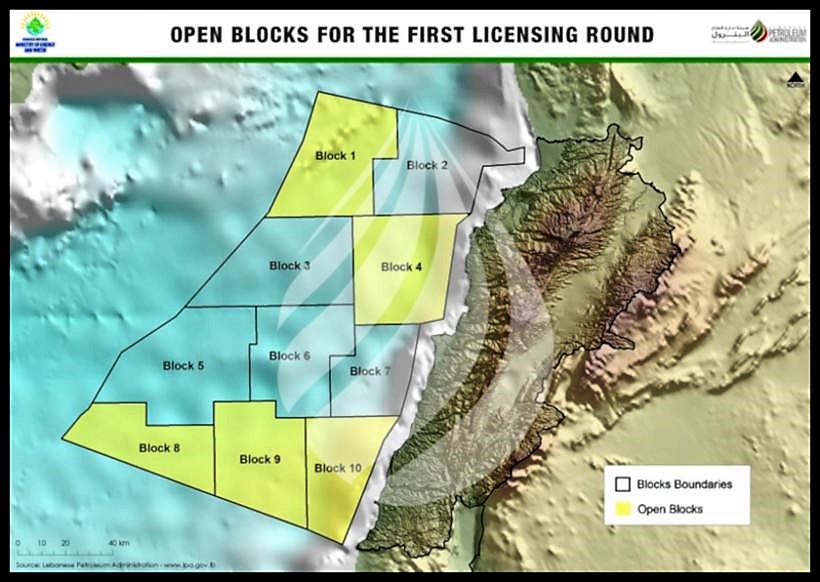
LONDON — I want to start this analysis concerning Lebanon by saying that I wish Lebanon, a beautiful country where I lived for three full years between 2012 and 2015, all the best possible luck in regard to its petroleum (oil and gas) sector development. In fact, after years of postponements, Lebanon is finally kickstarting its offshore oil and gas (O&G) industry. On January 4, 2017, the government approved two decrees, which were necessary to go ahead with the licensing procedure. Decree No. 42 defines the geographical parameters of the blocks in which Lebanon’s economic exclusive zone (E.E.Z., 22,700 sq. kilometers) is divided; Decree No. 43 sets out the tender protocol (T.P.) and the model exploration and production agreement (E.P.A.) to be entered with the bidding companies. A few weeks later, on January 26, 2017, Minister of Energy and Water Cesar Abi Khalil declared that blocks 1, 4, 8, 9, and 10, out of 10 overall blocks, would be open for bidding during the first offshore licensing round.     

Then a pre-qualification round, a second pre-qualification round to be more precise, was held between February 2, 20117 and March 31, 2017; according to this second pre-qualification round, 8 new companies qualified: 1 operator (India’s O.N.G.C. Videsh Limited) and 7 non-operators. Previously, in 2013, 46 companies had qualified via the first pre-qualification round—in specific, 12 of them qualified as operators (among them U.S. Chevron and Exxon Mobil, U.K. Shell, and France’s Total). But then, at that time, the tender process stopped abruptly. In fact, the government had never passed the decrees necessary to have a licensing round until January 2017.

In sum, because not all the 46 companies that pre-qualified in 2013 will be part of the licensing round, there are now 51 companies that have pre-qualified and should be willing to take part in the tender submitting bids in relation to the open blocks on September 15, 2017. After that day, the Lebanese Petroleum Administration (L.P.A.) will assess the received applications and send a report to the cabinet, which will decide by November 15 which companies will win the tender.

BACCI-Lebanon-Launches-Its-Offshore-Oil-and-Gas-Sector-June-2017-1
Attracting Exploration Investment by Ensuring Progressive Fiscal Regime — Source: Wissam Zahabi
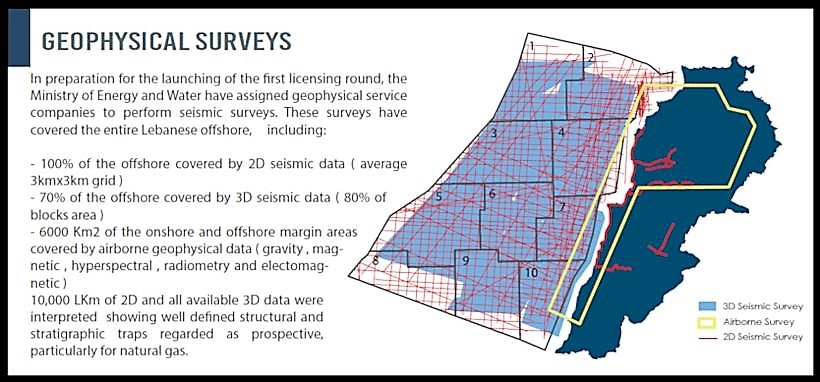
Initial estimates tell that buried under the Lebanese seabed there could be 30 trillion cubic feet (around 850 billion cubic meters) of natural gas and 660 million barrels of oil. Of course, until the companies that will sign a production sharing contract (P.S.C.) with the Lebanese government start their exploration phase, it’s impossible to confirm whether these initial estimates are correct. In preparation for the launching of the first licensing round, some years ago, the Ministry of Energy and Water had assigned geophysical service companies to perform seismic activities. These surveys covered the entirety of Lebanon’s offshore territory. In particular, 100 percent of the offshore was covered by 2D seismic data and 70 percent of the offshore was covered by 3D seismic data. Thanks to this activity, data related to 10,000 kilometers of 2D surveys and all the available 3D data, once interpreted, showed well defined structural and stratigraphic traps regarded as prospective, especially for natural gas.  

BACCI-Lebanon-Launches-Its-Offshore-Oil-and-Gas-Sector-June-2017-2
Geophysical Surveys — Source: Lebanese Petroleum Administration
In other words, until companies start drilling, there is no certainty of Lebanese O&G reserves, but 2D and 3D mapping and the recent natural gas discoveries in the E.E.Z.s of Cyprus, Egypt, and Israel give the Lebanese government hope that also Lebanon’s E.E.Z. could be rich in O&G—in 2010, the United States Geological Survey estimated that there could be up to an additional 122 trillion cubic feet of undiscovered natural gas in the Levant Basin, with also 1.7 billion barrels of recoverable oil. This means that for an international oil company (I.O.C.), when evaluating whether to invest in Lebanon, the risk doesn’t lie too much in geological problems but in geopolitical problems. In fact, because we’re talking of offshore operations, if on the one hand it’s true that finding and development (F&D) costs won’t be low, on the other hand they should not be too different from other offshore operations across the globe. For sure, if the price of a barrel of oil went down to $20 a barrel—a possibility that cannot be completely ruled out—there would be great difficulties in achieving breakeven.

So, the real problem for an investor is the geopolitical risk, which in Lebanon may be split into two main components: Lebanon’s very complex and dysfunctional internal politics and Lebanon’s difficult relationships with its neighbors.

With reference to the first component, it’s difficult to look to Lebanese politics with trust and hope. In fact, Lebanon’s politics is based on religious divisions (a confessionalism including 18 recognized religious sects). In practice, the highest offices are reserved to representatives from certain religious communities. For example, the president of the republic must be a Christian Maronite, the prime minister a Sunni, and the speaker of the Parliament a Shia. Similarly, seats in the Parliament are confessionally distributed but elected by universal suffrage. Each religious community has an allotted number of seats in Parliament, although all candidates in a particular constituency must receive a plurality of the total vote, which includes followers of all confessions. Indeed, it’s a complicated system, but, it’s the system that was introduced with the National Pact of 1943 (slightly changed in 1990 after the end of the Lebanese Civil War). The logic of this system is that it should be able to reduce the possibility of armed violence between the different components of Lebanon’s society, but at the same time its result is a big drag on the speed and meritocracy of Lebanon’s politics. Also, the members of the L.P.A. have been selected according to sectarian lines.  

Doing politics in Lebanon is quite difficult. Among the main political problems that Lebanon has recently experienced in the last years five years—and I just go by memory—there are the following issues

  • Absence of the president of the republic for more than two years (29 months)

  • Absence of a continuous supply of electricity

  • Acts of violence across the country, Beirut included

  • A high level of corruption at all levels of Lebanon’s society

  • A high public debt at 146 percent of the country's G.D.P. in 2016

  • Garbage crisis and related environmental issues

  • More than 1 million of Syrian refugees, but the number could be close to 2 million

  • Parliamentary elections, to be held in 2013, postponed until at least mid-2018

  • Poverty with around 28 percent of the population living under the poverty line

  • Savage privatization of public land across the country

With reference to the second component, Lebanon and its southern neighbor, Israel, are still technically at war. Moreover, to add an additional layer of complexity, there is an 854-square-kilometer wedge of sea between the two countries claimed by both Beirut and Tel Aviv. In the last years, the U.S. has tried to figure out a solution, or at least to avoid that this dispute could escalate into something more dangerous. In this regard, the U.S. has discouraged Israel and Lebanon from conducting O&G operations in the disputed wedge of water.

BACCI-Lebanon-Launches-Its-Offshore-Oil-and-Gas-Sector-June-2017-3
The Disputed Wedge of Water — Source: Menas Associates
In Israel, Noble Energy, a U.S. energy company quite active in Israel, and Israel’s Delek Group held the license for block Alon D, which stretches into the disputed area. This license expired in March 2016. Several reports have explained that the Israeli government has prevented drilling in the license area Alon D. Another controversy with Israel was linked to the discovery of the Tanin and Karish gas fields by Noble Energy in 2012 and 2013. These fields are located in Israeli-licensed areas Alon A and Alon C. And Alon C is only 4 kilometers away from Lebanon’s block 8 and 9 kilometers from block 9. Tension between Israel and Lebanon when Noble started drilling in the Karish field, which according to Noble Energy is 10.6 kilometers from Lebanon’s block 9, while according to Lebanon is just 4 kilometers away from the block. As a consequence, Lebanon’s government immediately voiced its concern regarding Karish field operations because these could affect the Lebanese gas reserves, either by drilling in a contiguous gas resource, or through horizontal drilling—Nabih Berri, the speaker of the Lebanese Parliament strongly voiced its concerns regarding the disputed offshore territory. Today, after a series of business transactions, the license to the Karish and Tanin fields is held by the Greek company Energean Oil & Gas.

BACCI-Lebanon-Launches-Its-Offshore-Oil-and-Gas-Sector-June-2017-4
Israel's Offshore Fields — Source: Offshore Energy Today
But now, Lebanon’s first offshore licensing round might create trouble. In fact, 3 blocks (block 8, 9, and 10) out of 5 of the blocks to be licensed cover the length of the offshore border between Israel and Lebanon, i.e., they include the disputed wedge. Why that? In March, at Eastern Mediterranean Gas Conference (E.M.G.C.) 2017 in Cyprus, Mr. Wissam Chbat, chairman and head of geology and geophysics of L.P.A. explained that

  • Block 1 has high-to-moderate hydrocarbon potential, with gas, possible condensate, and oil expected to be discovered

  • Block 4 has moderate potential for gas, oil, and possible condensate

  • Block 8 has high potential for gas and some condensate

  • Block 9 has very high potential for gas, condensate, and oil

  • Block 10 has very high potential for oil, condensate, and some gas             

BACCI-Lebanon-Launches-Its-Offshore-Oil-and-Gas-Sector-June-2017-5
Open Blocks for the First Licensing Round — Source: Lebanese Petroleum Administration
The government justification for the green light to proceed with block 8,9, and 10 is that they have a high potential. And in order to lure I.O.C.s’ interest in Lebanon’s offshore, it’s better to offer immediately the most promising areas, especially in the present environment of low oil prices. The idea is that it’s always better to start with the right foot.

In addition, as mentioned above, with reference to the three southern blocks, in the past, several times Lebanese politicians raised the issue that Israel, which is quite ahead of Lebanon in its offshore operations, via infrastructure located in its own E.E.Z. could extract natural gas located in Lebanon’s E.E.Z. These fears could be considered another justification to immediately put under a license those three blocks. Moreover, it’s worth mentioning that Lebanon and Syria didn’t complete the demarcation of their land and maritime borders either—Lebanon’s E.E.Z.’s northern border and Syria’s E.E.Z.’s southern border. And now demarcating maritime borders with Syria will probably be impossible until the end of the conflict in Syria. 

One initial consideration is that Lebanon should have already begun the development of its petroleum sector. Indeed, if the licensing phase had been completed in 2013, it would have been better for the coffers of Lebanon’s Treasury. In 2013, Brent crude prices averaged more than $100 a barrel. It’s true that petroleum operations, if successful, could span at least three decades, which means that an I.O.C. will always experience over the course of a specific project high oil prices as well as low oil prices, but it’s also true that when a government organizes a commodity licensing round, it’s much better if the price of the concerned commodity is quite high. The only real advantage that Lebanon could have right now is the low costs of oil services. Timing is not so good for Lebanon as it was four years ago. Instead, in the eastern Mediterranean region both Cyprus, Egypt and Israel are quite ahead with their projects.

BACCI-Lebanon-Launches-Its-Offshore-Oil-and-Gas-Sector-June-2017-6
Geographical Location of the Main Recent Gas Discoveries in Offshore Eastern Mediterranean — Source: European Parliament, Energy: A Shaping Factor for Regional Stability in the Eastern Mediterranean?, June 2017
In 2009, Noble Energy announced the discovery of the Tamar field (280 billion cubic meters of natural gas) in the Israeli E.E.Z. Then, still Noble Energy announced in 2010 the discovery of the Leviathan field (620 billion cubic meters) in the Israeli E.E.Z. and in 2011 of the Aphrodite field (140 billion cubic meters) in the Cypriot E.E.Z. Last but not least, in 2015, Italy’s E.N.I. announced the discovery of the giant Zohr field (850 billion cubic meters) in the Egyptian E.E.Z. These three countries are much ahead in their projects than Lebanon is. In fact, 

  • In Israel, natural gas is already extracted. The Tamar field was quickly developed and early 2013 it became operational supplying Israel with 7.5 Bcm per year; the Leviathan field’s Phase 1A will produce 12 Bcm per year starting in 2019.

  • In Cyprus, thanks to three licensing rounds (in 2007, 2012, and 2016) block 12 (Noble Energy, Delek, and Shell), 2 (E.N.I. and Korea’s Kogas), 3 (E.N.I. and Kogas), 9 (E.N.I. and Kogas), 11 (Total and E.N.I.), 6 (Total and E.N.I.), 8 (E.N.I.), and 10 (Exxon Mobil/Qatar Petroleum) have been awarded.

  • In Egypt, E.N.I. will start producing from Zohr in the 4th quarter of 2017—E.N.I. is the operator while British Petroleum has a 10-percent stake and Russia’s Rosneft a 30-percent stake. It’s possible that Zohr will be the first of a series of discoveries in the area. BP is proceeding with its development of West Nile Delta project, which could produce 12 Bcm, per year starting in 2017.     

All this said, despite a not-so-perfect timing and despite internal and external problems, Lebanon has probably to try to develop its offshore resources. When I.O.C.s and a country sign a petroleum contract, let’s say a P.S.C., they could arrive at the signature starting from distinct positions, but when they sign, they have, hopefully, found an agreement satisfying both parties. There is a caveat: under the current low oil prices, I.O.C.s may find several different investment opportunities; if a company doesn’t see an investment opportunity as sufficiently profitable, it can easily switch to drilling in other localities. Instead, a country doesn’t have the same privilege. Oil and gas deposits are fixed in a specific place. In brief, a country has to do with what it has.

Indeed, a country has to maximize its profits, but it has also to do a reality check. And, in the case of Lebanon, this reality check may be done with an eye to the amount of dollars that every year Lebanon must use to satisfy its energy requirements. In 2013, a year with high oil prices, Lebanon imported oil and derivatives for an amount of $5.11 billion, i.e., 11.4 percent of its G.D.P. Moving to 2016, a year of low oil prices, there was an 8.20 percent yearly rise in value of oil imports to $3.72 billion, which is equal to 98.21 percent of mineral products’ import value. These numbers would probably be a sufficient reason for Lebanon to try to develop its hydrocarbons sector. In fact, in addition to spending less money, by developing its own offshore natural gas deposits, Lebanon could start using natural gas rather than oil to produce electricity with many environmental benefits, give its citizens and industrial sector a continuous supply of electricity, permit its industrial sector to gain competitiveness in pricing and exports, and increase its energy security. On top of these improvements, Lebanese politicians, who are always overoptimistic, already envisage the possibility of creating new industries like petrochemicals—this idea is very premature.   

Until now, citizens and large-scale manufacturers have relied on their own electricity generators to ensure uninterrupted electricity supply—in some parts of the country there is no electricity for 18 hours a day, while at the same time current expenditures for Electricité du Liban, the public body controlling 90 percent of the activities of production, transportation and distribution of electricity in the country, are still the third most important point in the budget after debt service and public wages. Losses from intermittent energy supply and the utilization of private generators have translated into a considerable loss of competitiveness of Lebanese products on global markets. According to the Association of Lebanese Industrialists, the average energy factor cost is 5.7 percent of the companies’ selling price, but this cost is as high as 35 percent of the selling cost for energy intensive industries like manufacturing.

By developing its offshore natural resources, Lebanon could increase its overall energy security in order not to repeat the problem Lebanon is currently facing with its two natural gas power plants. In fact, presently Lebanon has already two combined cycle gas turbines (C.C.G.T.s), Zahrani (460 MW) and Deir Ammar (460 MW), in operation but they are not working properly because they use fuel oil and not natural gas, which, in light of external political and economic circumstances, is not currently exported to Lebanon. 

Corruption is a huge problem. Transparency International, a global civil society organization, in its corruption perceptions index ranked Lebanon 136 out of 176 countries in 2016. And the idea of getting rid of corruption is probably just wishful thinking. Think of Angola, which is a good case in point. From 2002 to 2015, this country’s exports totaled almost $600 billion, nearly all of it from oil. According to the Catholic University of Angola’s Center for Studies and Scientific Research, oil revenue brought the government coffers $315 billion. At the same time $28 billion from government budgets remained unaccounted for and up to 35 percent of the money spent on road construction vanished. And in relation to Lebanon, it’s important to underline that immediately after the first pre-qualification phase, already in 2013, serious transparency problems had emerged concerning two of the three qualified Lebanese companies.

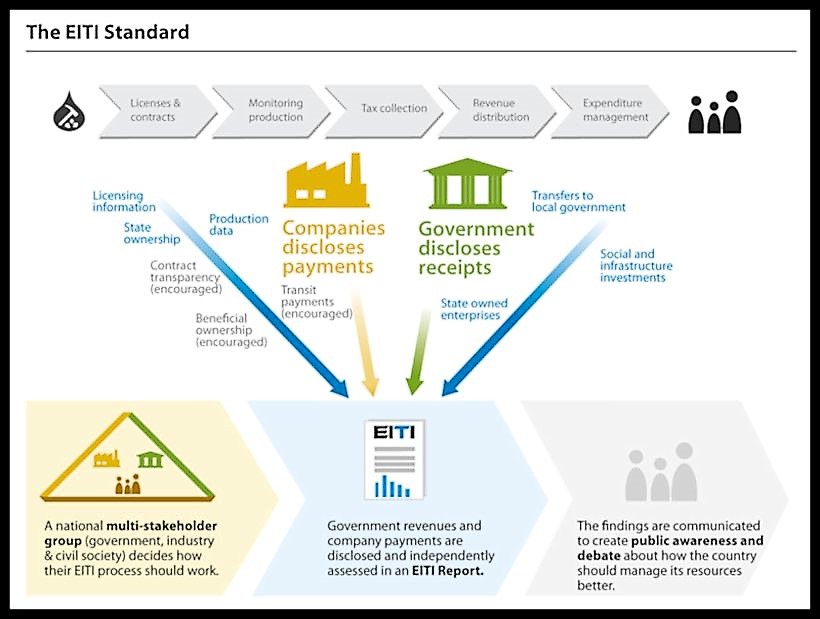
One positive, but limited, note for the possible investors is that Lebanon has announced its intention to join the Extractive Industries Transparency Initiative (E.I.T.I), which is a voluntary initiative through which the government of Lebanon will commit to publishing reports on how the government manages the oil, gas, and mining resources. In practice, the participation in the E.I.T.I. will promote transparency in the hydrocarbons sector. It would be quite important that Parliament approved a draft law, which was prepared in the last two years, regarding transparency in the O&G sector before November.       

BACCI-Lebanon-Launches-Its-Offshore-Oil-and-Gas-Sector-June-2017-7
The E.I.T.I. Standard — Source: E.I.T.I.
There is a final question: What companies could really be interested in investing in Lebanon? It’s difficult to have an answer. U.S. Exxon Mobil, Chevron, and Anadarko, Brazil’s Petrobras, Italy’s E.N.I., Denmark’s Maersk Spain’s Repsol, U.K. Shell, Norway’s Statoil, France’s Total, Japan’s Inpex, Malaysia’s Petronas, and O.N.G.C Videsh Limited all pre-qualified as operators—12 in 2013 and 1 in 2017. Indeed, these companies are among the best I.O.C.s at world level. But it’s quite probable that the interest they had in 2013 is not present any longer in light of all the considerations developed above.

Recently, a few days ago, Foreign Minister Gibran Bassil while meeting with his Chinese counterpart, Wang Yi, encouraged China to invest in Lebanon’s oil and gas sector. Normally, this type of exhortation would be perfectly in line with the meeting. But when you are the foreign minister of a country that is currently carrying out its first licensing round to which no Chinese company will participate, such a behavior raises the doubt that the pre-qualified companies haven’t until now shown excessive interest in the licensing round and that Lebanon has to develop a plan B. Of course, this could easily be just a simple conjecture because companies will submit their tenders only on Sept. 15, 2017.     

In particular, in view of the considerations developed in this analysis, it could be difficult for an I.O.C. to develop a good business case and decide to invest in one of the three blocks comprising the disputed wedge of water. Moreover, Lebanon does not have the naval capabilities to protect militarily its future O&G installations, while Israel has powerful naval means.

But there is something more. The sectarian divisions of Lebanese society, which are mirrored in the country’s political institutions, until now have consistently and only slowed the development of an O&G sector in Lebanon. What if instead the energy sector with its consistent revenue stream became a new lever capable of kindling another time Lebanon’s society internal conflicts?             

                   
For More Information Please See