Thursday, April 26, 2018

Current Trends Concerning Petroleum Service Contracts in the Middle East

BACCI-Current-Trends-Concerning-Petroleum-Service-Contracts-in-the-Middle-East-April-2018-Cover


April 26, 2018

London, United Kingdom

Dear friends,

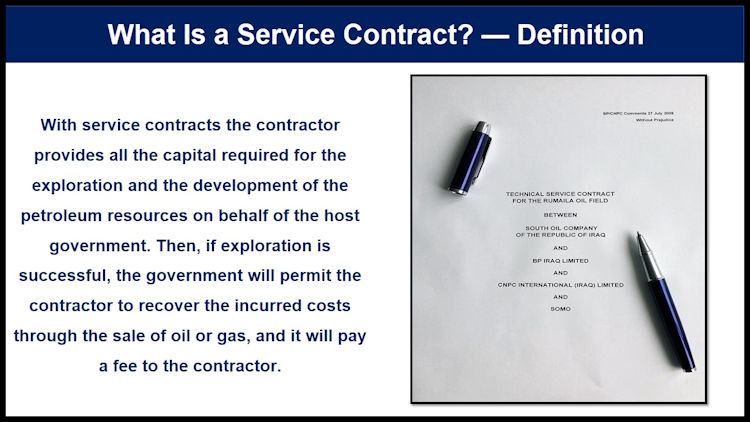
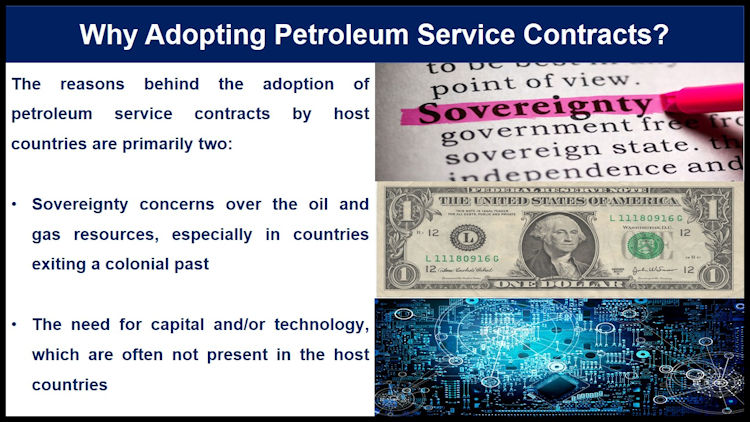
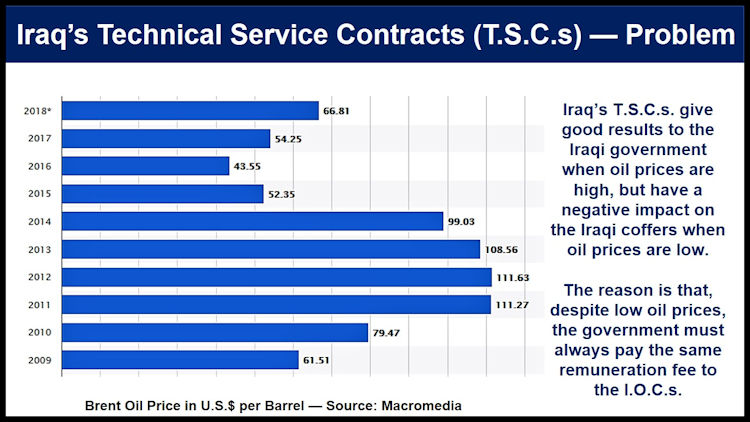
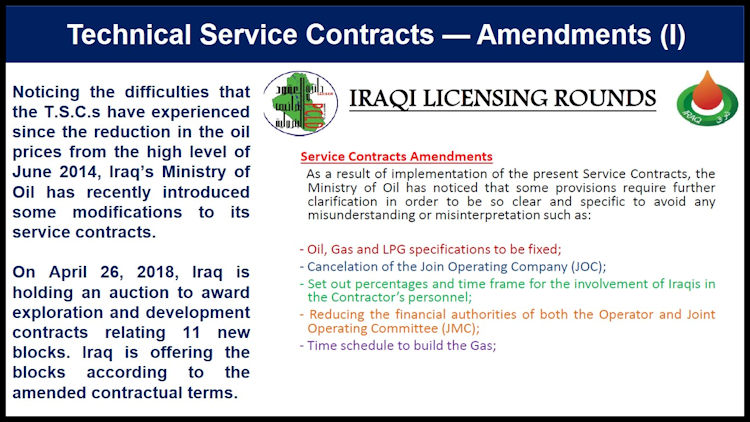
I would like to share with you the presentation that I gave at the European Chapter Event International — Petroleum Scholar Workshop, which was organized in London, United Kingdom, by the Association of International Petroleum Negotiators (A.I.P.N.) on April 26, 2018.  

Thank you.

Best regards,

Alessandro

BACCI-Current-Trends-Concerning-Petroleum-Service-Contracts-in-the-Middle-East-April-2018-1

BACCI-Current-Trends-Concerning-Petroleum-Service-Contracts-in-the-Middle-East-April-2018-2

BACCI-Current-Trends-Concerning-Petroleum-Service-Contracts-in-the-Middle-East-April-2018-3

BACCI-Current-Trends-Concerning-Petroleum-Service-Contracts-in-the-Middle-East-April-2018-4

BACCI-Current-Trends-Concerning-Petroleum-Service-Contracts-in-the-Middle-East-April-2018-5

BACCI-Current-Trends-Concerning-Petroleum-Service-Contracts-in-the-Middle-East-April-2018-6

BACCI-Current-Trends-Concerning-Petroleum-Service-Contracts-in-the-Middle-East-April-2018-7

BACCI-Current-Trends-Concerning-Petroleum-Service-Contracts-in-the-Middle-East-April-2018-8

BACCI-Current-Trends-Concerning-Petroleum-Service-Contracts-in-the-Middle-East-April-2018-9

BACCI-Current-Trends-Concerning-Petroleum-Service-Contracts-in-the-Middle-East-April-2018-10

BACCI-Current-Trends-Concerning-Petroleum-Service-Contracts-in-the-Middle-East-April-2018-11

BACCI-Current-Trends-Concerning-Petroleum-Service-Contracts-in-the-Middle-East-April-2018-12

BACCI-Current-Trends-Concerning-Petroleum-Service-Contracts-in-the-Middle-East-April-2018-13

BACCI-Current-Trends-Concerning-Petroleum-Service-Contracts-in-the-Middle-East-April-2018-14


Thursday, April 12, 2018

Kuwait’s Petroleum Sector: What Is the Right Strategy?

BACCI-Kuwait-Petroleum-Sector-What-Is-the-Right-Strategy-April-2018-Cover


The analysis “Kuwait’s Petroleum Sector: What Is the Right Strategy?” has been written for the 5th Kuwait Oil and Gas Summit, which is organized by The C.W.C. Group, an energy and infrastructure conference, exhibition and training company. The 5th Kuwait Oil and Gas Summit will take place in Kuwait City, on April 16-17, 2018.


April 12, 2018

London, United Kingdom

With 101.5 billion barrels of oil (BP Statistical Review of World Energy 2017), Kuwait owns the world’s seventh largest proven oil reserves, or 5.9% of the world’s proven oil reserves. The country’s economy is dominated by the oil sector. In fact, more than 50% of the G.D.P, 92% of export revenues (from oil and oil products and fertilizers), and 90% of the government income come all from the oil sector (C.I.A. World Factbook, 2018). With reference to natural gas, Kuwait, with 1.8 trillion cubic meters (Tcm) of natural gas (BP Statistical Review of World Energy 2017), on par with Norway and Egypt, owns the world’s 16th largest proven natural gas reserves, or 1.0% of the world’s proven natural gas reserves.  

Kuwait has a production capacity of about 3.1 million barrels per day (MMb/d) and an effective production of about 2.7 MMb/d. Kuwait’s production of about 250,000 b/d at the Wafra (onshore) and Khafji (offshore) fields in the Partitioned Neutral Zone, which is the border region between Kuwait and Saudi Arabia, has been shut down since 2015. At the current rate of production, Kuwait’s oil should last for almost 88 years, while gas reserves for more than 100 years. Kuwait, as well as the other Persian Gulf producers, has a couple of important advantages: very low production costs and a geographic position at the crossroads of three continents (Europe, Africa, and Asia), which permits Kuwait to easily export oil and oil products to more than one market.
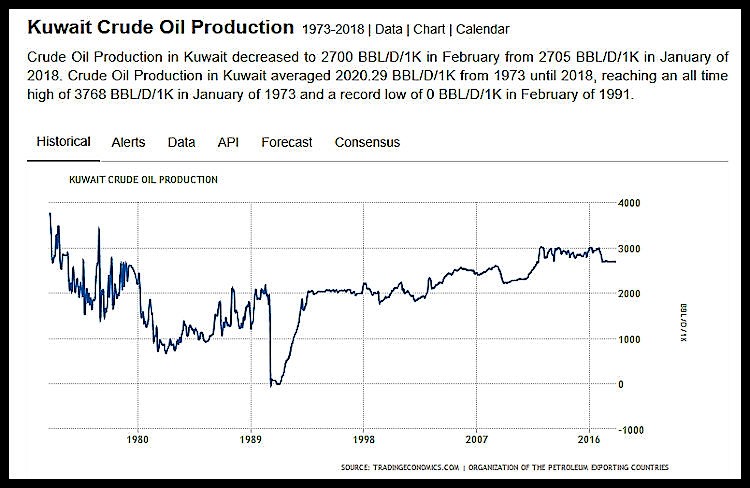
BACCI-Kuwait-Petroleum-Sector-What-Is-the-Right-Strategy-April-2018-1

Kuwait has production costs among the lowest in the world. In fact, it has had until now production costs of about $8.50 per barrel on average (in specific, $3.70 for capital expenditures and $4.80 for operating expenditures). Probably, these production costs will relatively rise in the future because production will derive from more complex fields. However, because oil is a commodity (despite different A.P.I. degrees and sulfur content), low production costs are one of the most important commercial advantages for an oil producer.

At the same time, thanks to its geographic position, Kuwait may easily export its oil to the Asia-Pacific region, which receives about 80% of its oil exports (Kuwait’s overall exports are estimated at about 2.0 MMb/d). Crude oil is primarily sold on term contracts, and its crude oil exports have been until recently a single blend of all the Kuwaiti types of crudes, which is called ‘Kuwait.’ This blend has 30.5 A.P.I. degrees and 2.6% of sulfur content (it’s defined a sour crude). Presently, with the help of some Asian refiners, Kuwait is testing in Asia whether there might be some interest in a new Kuwaiti blend called ‘Super Light,’ which has an A.P.I. gravity of 48 degrees and 0.4% of sulfur content. In addition, in August 2018, Kuwait wants to launch the blend ‘Kuwait Heavy,’ which has an A.P.I. gravity of 16 degrees and 4.9% of sulfur content.   

So, Kuwait represents a reliable and secure oil producer, which has been in the oil business since 1938 when oil was discovered four years after the signature of the concession in favor of a joint venture between Anglo-Persian Oil Company (today’s British Petroleum) and Gulf Oil (today part of the U.S. company Chevron). And, for all these decades, apart for a short hiatus linked to the invasion of Kuwait by Iraq’s army, Kuwait has been one of the world’s most important and reliable producers.

However, because of the evolving energy scenarios linked primarily to geopolitical considerations, disruptive technologies, and climate change goals, it has become more difficult for a petroleum-producing country to understand the future opportunities and challenges concerning the petroleum sector. In practice, the petroleum industry is in transformation, and all the petroleum-producing countries (but, it would be more correct to add all the petroleum-importing countries as well) must learn how to mitigate the present uncertainties. And, as a producer, Kuwait is not exempt from this difficult challenge.

In addition, these uncertainties regarding the development of the world’s petroleum industry are added in Kuwait to an economy that is completely dependent on the sales of oil and oil products. In fact, despite some attempts, Kuwait has not succeeded in diversifying its economy and in supporting the development of the private sector. The public sector employs about 74% of the citizens. Be it clear that these economic features are quite widespread among all the Persian Gulf producers (neighboring Iraq is experiencing the same economic problems in addition to high costs linked to the reconstruction after the ISIS insurgence).

The level of a country’s petroleum dependence can be measured according to several different methodologies. In any case, three good indicators may be: petroleum activities representing a sizable share of G.D.P., petroleum rents representing a sizable share of G.D.P., and petroleum exports representing a sizable share of the merchandising exports. In brief, Kuwait has high values in relation to all these three indicators.

BACCI-Kuwait-Petroleum-Sector-What-Is-the-Right-Strategy-April-2018-2
What Did Kuwait Export in 2016? — Source: The Atlas of Complexity, Harvard University
The government had passed its first long-term economic development plan in 2010. The idea was to spend up $104 billion over just four years with the specific goal of diversifying the economy, bringing investments in Kuwait, and increasing the private-sector share of the economy. Many of these projects never materialized because of the uncertain political situation and the delays in awarding the contracts. 

In Kuwait, diversification is not happening primarily for two reasons. First, because it’s never an easy task to diversify the economy of a commodity-producing country. And this is true no matter in what part of the world we are. Also, for a country like Norway, which is normally considered the model of a successful petroleum-producing country, diversifying the economy (although not completely) has not been an easy task, and several specific (of the Norwegian state) factors helped Norway reach this goal. In fact, for a commodity producer, there is always, behind the corner, the risk of facing two dangerous phenomena, i.e., the Resource Curse and the Dutch Disease.  

Second, diversification is not happening in Kuwait because of the difficult relationships between the National Assembly, on the one side, and the executive branch, on the other side. Historically, in Kuwait, the relationships between these two institutional bodies have never been simple, and they have stymied many economic reforms proposed over the years. A strong confrontation between the National Assembly and government concerning the way to deal with the management of the natural resources according to the interpretation of the text of the Constitution had already materialized in the 1960s.

However, many petroleum-producing countries find themselves in dire financial straits after an oil’s price fall, as it occurred in 2014. So, if a country’s economy is based on just a single pillar, when this pillar is not any longer stable, there are bad economic consequences for the country. In practice, a single-pillar economy has lower resilience against shocks affecting its single pillar than the resilience of an economy based on several different pillars. And this is what exactly occurred to Kuwait. The adage ‘never put all the eggs in a single basket’ is true for private investors as it is for countries.  

In fact, in 2015, for the first time in 15 years, Kuwait realized a budget deficit. The following year, the deficit increased to 16.5% of the G.D.P. Then, in 2017, the deficit decreased to 7.2%. At the same time, the government issued $8 billion’s worth of international bonds—there is a trend in this direction in the Gulf Cooperation Council (G.C.C.) region. Kuwait’s Fund for Future Generations, the sovereign wealth fund, in which each year Kuwait saves at least 10% of government revenues, helped cushion Kuwait against the impact of the reduction in the oil prices. Without capital expenditures and social allowances, the latter make up two thirds of the private sector salaries, the economy would have slowed more consistently.  

Considering the above points, it appears clear that Kuwait’s overall economic development must pass through the diversification of the economy and a boost in private-sector hiring. However, as economic literature has well explained, this is easier said than done, especially in a country subject to harsh weather conditions as Kuwait is. Probably, the best route would be the development of industrial clusters linked to Kuwait’s characteristics and not a top-down industrial policy established by the government.

As the theory of cluster development explains, clusters pursue competitive advantage and specialization, and they do not attempt to replicate what is happening in other locations. With clusters,

[g]overnments – both national and local – have new roles to play. They must ensure the supply of high-quality inputs such as educated citizens and physical infrastructure. They must set the rules of competition – by protecting intellectual property and enforcing antitrust laws, for example – so that productivity and innovation will govern success in the economy. Finally, governments should promote cluster formation and upgrading and the buildup of public or quasi-public goods that have a significant impact on many linked businesses. This sort of role for government is a far cry from industrial policy. (Porter, 1998)

So, branching out to other industrial sectors according to a cluster logic may be the correct way. Kuwait might be the location for clusters related to technologies linked to living in hot environments. For instance, technologies linked to water desalinization, solar energy, and agriculture in arid lands.

Instead, with reference to the petroleum sector, the correct strategy, despite all the present uncertainties, must be continuity with the past. Here the logic must be to understand what Kuwait can and cannot do now and in the next years. In fact, notwithstanding all the ongoing discussions, it’s impossible for Kuwait not to rely on the revenues deriving from the sale of oil, which has been for the last decades and will continue to be, at least in the near future, the country’s most important asset. As of today, without oil revenues, numbers tell us that Kuwait’s economy would come to a grinding halt. Plus, it’s important to understand that diversifying the economy would take years before making a dent on the current structure of Kuwait’s economy, which is dependent on the export of oil and oil products.

In 1997, Kuwait formulated ‘Project Kuwait,’ at that time a $7 billion 25-year plan having the goal of increasing the country’s oil production capacity (and compensate for the decline at the supergiant Burgan field) with the help of international oil companies (I.O.C.s). In specific, Kuwait wanted to initially increase output at five northern oil fields—Abdali, Bahra, Ratqa, Raudhatain, and Sabriya—from a production rate of about 650,000 b/d to 900,000 b/d within the following three years. Then in mid-2000s, the basic idea of the project became to increase the country’s oil production capacity to 4.0 MMb/d by 2020.
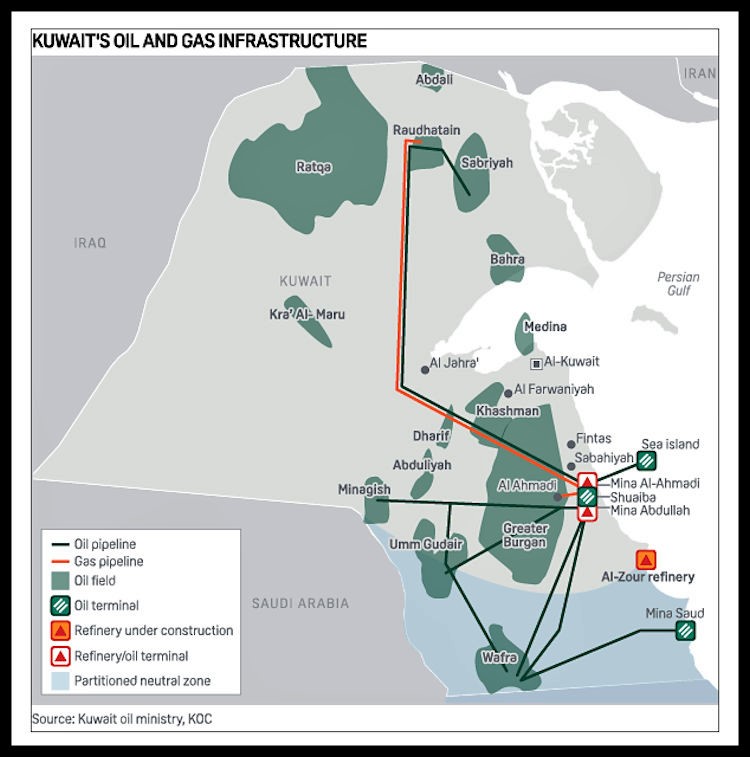
BACCI-Kuwait-Petroleum-Sector-What-Is-the-Right-Strategy-April-2018-3

This whole project has not materialized until now despite the authorities have always reaffirmed until recently that this is still an achievable target. The main reason for the delay is the political opposition to the I.O.C.s and to the contractual structure offered to them. Many of the new projects have faced relevant delays because of the National Assembly’s opposition to the envisaged new contractual structure. For more information about Kuwait’s petroleum contracts, please see: BACCI, A., Kuwait's Oil and Gas Contractual Framework and the Development of a Modern Natural Gas Industry (Dec. 2011).

In brief, in order to bring in Kuwait the I.O.C.s, at the end of the 2000s, Kuwait started to offer Enhanced Technical Service Agreements (E.T.S.A.s), which allow the foreign companies to provide technical expertise (needed especially for the more challenging fields) and management expertise for a fee. Kuwait’s politicians have always been quite skeptical about the transparency of the E.T.S.A.s and whether what Kuwait receives in exchange for these services is fair. In any case, in the past ten years, Kuwait has signed some E.T.S.A.s with Shell, BP, and Total, although the development of the contracts has been marred by several missed deadlines. 

Kuwait won’t probably achieve the target of 4 MMb/d by 2020, but Kuwait Petroleum Corporation (K.P.C.) has recently affirmed that it intends to invest more than $500 billion to push its petroleum production to 4.75 MMb/d by 2040. Whether the 4.75 MMb/d target includes Kuwait's production from the neutral zone is not clear. In any case, this increase will derive mostly from northern Kuwait, which is currently producing 1 MMb/d. In specific, the company should spend $114 billion in capital expenditures over the next five years and additional $394 billion after the initial five years up to 2040.

BACCI-Kuwait-Petroleum-Sector-What-Is-the-Right-Strategy-April-2018-4

In practice, although the petroleum market has changed consistently over the past 10 years, Kuwait proposes again an oil-production expansion plan. And, despite that Kuwait is subject to OPEC quotas and that OPEC and non-OPEC members are currently restraining their crude oil production to support oil prices, there is a logic behind this choice. And Kuwait is not the only country carrying out this type of plan. In fact, throughout the Persian Gulf oil-producing countries, there is a medium-term trend toward expanding crude oil production (see for instance the expansion plans relating to Iraq and Iran as well).

With reference to oil, all these countries share the same advantages that Kuwait has, i.e., low crude-oil production costs and an interesting geographic position capable of serving more than one market (the favored one is the Asian market now). And because oil is a commodity (let’s put aside the differences relating to A.P.I. degrees and sulfur content) and considering the two above-mentioned advantages, if oil markets were not affected by distortive political and economic barriers, it would be evident that the most obvious oil producers in the world should always be the Persian Gulf producers and Russia as well. Think of David Ricardo’s theory of comparative advantage. So, summing up, this medium-term trend tells us that these countries, including Kuwait, are betting on cashing in on these two mentioned advantages, if not today, on a medium-term horizon. 

What Kuwait is slowly trying to achieve is probably the correct strategy under the present uncertain circumstances. In any case, selling oil and oil products will require a more detailed attention to the whole petroleum chain, from upstream to downstream. In fact, competition among producers is increasing both at the regional and at the international level with the specific goal of capturing opportunities in the market. For sure, Kuwait is well positioned to take advantage of the growing oil demand occurring in Asia, but this is true for all the other Persian Gulf producers as well, and it seems that in the future also oil producers from other geographic areas might try to sell oil in Asia. For Kuwait, enhancing customer relationships will be crucial to maintain prearranged fixed sales agreements, which guarantee a certain cash flow. Because oil is a commodity, differentiation strategies are not easy to implement. One route might be to have an enlarged role in relation to oil trading.

At the same time, Kuwait must necessarily continue to increase its production of non-associated natural gas; its associated natural gas production makes up 80% of the total natural gas production. According to BP Statistical Review of World Energy 2017, Kuwait in 2016 produced 17.1 billion cubic meters (Bcm) of natural gas, while it consumed 21.9 Bcm. The goal is to increase non-associated gas production to 2.5 billion cubic feet a day (Bcf/d) in 2040 from the level of 0.5 Bcf/d in mid-2018. Kuwait needs large supplies of natural gas to generate electricity and to carry out water desalination, petrochemical production, and enhanced oil recovery to boost oil production. In specific, the electricity sector often fails to generate enough electricity to meet peak demand.

Moreover, because Kuwait for a good share produces electricity by burning oil and other liquids, which in this way are not exported, Kuwait is currently losing revenues from the missed sales of this oil and other liquids. More domestic natural gas production from non-associated gas fields might free some quantities of oil for export with consequently the result of increasing the revenues for Kuwait. The need to increase natural gas availability is quite urgent because domestic energy demand is going to double between 2017 and 2030.

Kuwait has been relying on L.N.G. imports since 2009 when natural gas consumption overpassed domestic production, and this trend seems not to abase. In December 2017, K.P.C. signed a 15-year L.N.G. gas import deal with Shell (the deal will start in 2020) to help Kuwait to continue to close the gap between its gas demand and its gas production. At the end of the 2000s, the country started to develop, although slowly, its non-associated gas reserves, primarily from the Jurassic non-associated gas field (technically quite challenging) in norther Kuwait. This field was discovered in 2006 and has 35 Tcf of estimated reserves. In 2017, the government approved the second phase of the North Kuwait Jurassic Gas project, and, finally, this year three early production facilities, Sabriya and Umm Niqa fields, East Raudhatain field, and West Raudhatain field are coming online. Together, these facilities will produce 200,000 b/d of light crude and 500 MMcf/d of natural gas.


Tuesday, April 3, 2018

Lebanon’s Petroleum Sector: The Correct Expectations

BACCI-Lebanon-Petroleum-Sector-The-Correct-Expectations-April-2018-Cover


April 3, 2018

London, United Kingdom

Dear friends,

I would like to share with you the analysis “Lebanon’s Petroleum Sector: The Correct Expectations,” which I have recently written on the occasion of Lebanon International Investment Forum, a two-day investment forum organized in Beirut, Lebanon by the C.W.C. Group on April 10-11, 2018.   

Thank you.

Kind regards,

Alessandro

Wednesday, March 21, 2018

Three Questions About Egypt’s Oil and Gas Sector

BACCI-Three-Questions-About-Egypts-Oil-and-Gas-Sector-March-2018-Cover


The analysis “Three Questions About Egypt’s Oil and Gas Sector,” has been published by the Oil and Gas Council, the leading network of energy executives in the world. This analysis is related to Africa Assembly 2018, which is the largest African O&G finance and investment event. The Oil and Gas Council will organize Africa Assembly 2018 on June 5-6 in Paris, France.

March 21, 2018
London, United Kingdom

 1 — What is Egypt’s role in the O&G business on a global scale?

Egypt has been one of the first countries active in the petroleum extraction. In fact, the country has been producing crude oil for more than a century; Egypt’s first commercial crude oil production started in 1910 in the Sinai Peninsula. Today, according to BP Statistical Review of World Energy 2017, the country owns 3.5 billion barrels of proven oil reserves, which position Egypt as the 6th and 27th largest holder of proven oil reserves in Africa and in the world, respectively. Almost 50% of the oil production occurs in the Western Desert, while the remaining production is located in the Mediterranean Sea, the Nile Delta, the Gulf of Suez, and Upper Egypt (the latter is the southern part of the country).

Despite being a medium-sized oil producer with 691,000 b/d in 2016, Egypt’s oil consumption at 853,000 b/d is higher than its production (this is not surprising because Egypt has a population of 95.5 million), so Egypt has been recently obliged to import oil from other countries—mainly from Middle Eastern countries. Over the last forty years, oil’s share in total primary energy production has consistently been reduced (it was 95% in 1970 while it is today 44.6%)—of course, oil is the main fuel used for transportation.  

However, the real added value in the O&G business for Egypt derives from the country’s natural gas reserves, which at 65.2 Tcf position Egypt as the 3rd and 16th largest holder of proven natural gas reserves in Africa and in the world, respectively. In 2016, Egypt was the third African natural gas producer with an overall annual production of 41.8 Bcm. Egypt’s natural gas sector started to expand at the end of the 1990s because of increased domestic demand and of the idea of exporting the excess natural gas as L.N.G. In 2009, Egypt’s natural gas production peaked at 62.7 Bcm, but, then, in 2010, production started to decline. The reason was that some of the offshore production areas in Mediterranean Sea had reached the maturity level while at the same investments were lacking because Egypt was slow in reimbursing the foreign contractors. On top of this, the oil price reduction in 2014 did not help attract foreign investments in the country.

The whole picture changed completely in 2015 when Italy’s E.N.I. announced the discovery of the Zohr field, a giant offshore gas field in the Mediterranean Sea at a depth of 1,450 meters with 30 Tcf of gas in place, of which 22 Tcf of recoverable reserves. In December 2017, E.N.I. started production at the Zohr field at the level of 350 MMcf/d. From this level, daily output is set to rise to about 1 Bcf/d in June 2018 and then 2.7 Bcf/d by the end of 2019. In addition to the Zohr field, other gas fields—West Nile Delta (recoverable reserves of 5 Tcf), Noroos (estimated reserves in place of 530 Bcf), and Atoll (recoverable reserves of 1.5 Tcf)—are increasing Egypt’s natural gas production. And the Egyptian Natural Gas Holding Company (EGAS) intends to launch soon a new licensing round centered on 9 blocks in mature areas in the eastern part of Egypt’s Mediterranean Sea. Later, this round will be followed by another round covering frontier areas in the western part of Egypt’s Mediterranean Sea. Summing up, there is a complete commitment toward discovering new gas reserves.     

2 — In addition to O&G reserves, what is Egypt’s added value?

Geography and infrastructure. In fact, not only is Egypt gifted with O&G reserves, but also it is strategically located so that it is one of the world’s most important transit points for the physical trade of hydrocarbons. The Suez Canal is a transit waterway for oil and L.N.G. shipments, while the Sumed Pipeline (whose book capacity is set at 2.5 MMb/d) is the only alternative route in proximity of the Suez Canal to transport crude oil from the Red Sea to the Mediterranean Sea if tankers are not able to pass through the Suez Canal. If it were impossible to navigate through the Suez Canal or to use the Sumed Pipeline, tankers would be obliged to navigate around the Cape of Good Hope in South Africa. This would mean to increase both the costs and the shipping time. The Cape of Good Hope route would mean 15 more days of navigation to Europe and 8 days to 10 days more of navigation to the United States.

However, the recent natural gas discoveries throughout the eastern Mediterranean Sea in the offshore of Egypt, Cyprus (Aphrodite field, 4.5 Tcf; Calypso field, believed to hold 6 Tcf  to 8 Tcf), and Israel (Tamar field, 10 Tcf; Leviathan field, 22 Tcf)—and with the future possibility of natural gas discoveries offshore Lebanon—for the time being, offshore Syria is completely out of the picture as a consequence of the civil war ravaging the country) has additionally increased the geographic importance of Egypt, which might become in the near future a regional energy hub with particular attention given to the trading and export of natural gas. The World Bank supports the development of Egypt’s role as an energy hub. It’s plausible that Egypt will be again a gas exporter in 2019. In any case, it is premature to know for how long Egypt will be a gas exporter—it depends on whether there will be new natural gas discoveries and on the country’s population growth. However, in addition to exporting its own gas, Egypt could export Cyprus’s and Israel’s gas. In fact, all the above-mentioned gas fields, the Zhor field included, are located very close to one another.       

And, of all the mentioned countries, in addition to its advantageous geographical position, Egypt has already in place an export infrastructure. Egypt has two L.N.G terminals, one in Idku and one in Damietta. These terminals, which have a combined capacity of about 19 Bcm per year (Idku, 11.48 Bcm; Damietta, 7.56 Bcm) are currently not used. These terminals might well be used for exporting Cyprus’s and Israel’s gas. In addition, if Egypt were able to find a solution to its confrontation with Israel regarding Egypt’s shut off in 2012 of its gas exports to Israel via the El Arish-Ashkelon Pipeline, this pipeline (9 Bcm per year) would be again an important natural gas infrastructure in the region. Three arbitrators at the International Chamber of Commerce ruled that Egypt’s natural gas companies will have to pay Israeli Electric Corp. $1.76 billion for halting gas supplies. Instead, the future of the Arab Gas Pipeline, which connects Egypt to Syria and Lebanon, is difficult to understand considering the present conflict in Syria.

It’s necessary to underline that duplicating L.N.G. export infrastructure in all the involved countries would be economically illogical. At a time when it is quite important to limit both capital expenditure (capex) and operating expenditure (opex) per MMBtu of produced natural gas, building in Cyprus and/or in Israel export infrastructure already present in Egypt would eat away at the profitability of Cyprus’s and Israel’s gas exports. So, despite all the difficulties of the eastern Mediterranean geopolitics, collaboration among the involved actors—and, in specific, between Cyprus, Egypt, and Israel—would really go a long way in maintaining eastern Mediterranean natural gas prices competitive on the world markets.

3 — Is Egypt’s O&G fiscal framework attracting to international companies?

Egypt is one of the oldest oil producers in the world, which means that in the country there is a lot of experience in managing petroleum operations. Hydrocarbon production is by far the largest single industrial activity, representing approximately 16 percent of Egypt’s G.D.P. And the energy sector is the most important sector for foreign direct investment (F.D.I.) in the country.

Egypt’s petroleum fiscal framework has changed over the decades to reflect the evolution in the way of thinking how to structure a petroleum fiscal framework. Until 1962, Egypt based its framework on a royalty/tax system, then between 1963 and 1972 it moved to a participation system, and lastly, since 1973, it has been using a production sharing system.

The production sharing contracts that Egypt has signed over the years have had in general terms a positive result for both Egypt and the foreign companies—although it must be clear that unless a petroleum fiscal system has a lot of flexibility, which is always difficult to implement, it is improbable that it may always remain the same and give the same results over the years without any amendments.

One of the Egyptian P.S.C.s’ most attracting features to foreign companies is that in Egypt the P.S.C.s are enacted into law. In practice, this feature has always given foreign companies a lot of confidence that their investments are protected and upheld by national law. The downside is that, because of enacting contracts into law, it is then more complicated to renegotiate or amend the contracts—in fact, it’s required the approval of the Ministry of Petroleum and of Parliament. In addition, investments in Egypt are generally protected against expropriation, especially if there is a bilateral investment treaty between Egypt and the home country of the foreign investor.    

When there is a commercial oil and/or gas discovery, a non-profit joint venture (J.V.) between the contractor company (50% stake) and Egypt’s competent company (50% stake)—the competent company may be the Egyptian General Petroleum Corporation (E.G.P.C.), the Egyptian Natural Gas Holding Company (EGAS), the Ganoub El Wadi Petroleum Holding Company (Ganope)—is established as a special joint stock company (the Operating Company). In all the contracts, the government is entitled to a 10% royalty calculated on the total quantity produced. However, Egypt’s competent company, and not the contractor company, pays the royalty. Similarly, the contractor company is subject to the Egyptian corporate income tax (C.I.T.), which for the O&G sector is set at the rate of 40.55%. However, who pays the contractor company’s C.I.T. is Egypt’s competent company, which pays the tax out of the competent company’s share of the petroleum produced and saved as defined in the P.S.C.

One of the challenges that continue to trouble the foreign companies investing in Egypt’s O&G sector is the issue of delayed payments. The Egyptian government is currently trying to pay out the remaining backlog of arrears to the I.O.C.s to encourage more foreign companies to invest in exploration and development activities, but this issue is still far from being fixed. The government had a peak of arrears at $6.3 billion in 2013, reduced to about $3.5 billion in March 2017.

In the past years, to increase hydrocarbons production, Egypt has offered more generous percentages for profit and cost recovery (expenditures with respect to exploration, development, and related operations). In specific, it raised cost recovery percentage from 35% to 40%. Still, along the same line, it was decided the abolition of the mandatory abandonment of part of the concession area every two years—the contractor can now present a new exploration plan for the concerned area and not abandon it.      

This strategy has paid off because Egypt has signed several oil and gas exploration deals in the past years. With reference to natural gas, Egypt has signed natural gas deals according to which it pays foreign companies a higher price for the natural gas the companies produce—before the price was $2.65 per MMBtu, while the new prices range from $3.95 to $5.88 per MMBtu. In fact, before this contractual modification, some relevant gas discoveries remained undeveloped because foreign companies had not found any profitability in developing those discoveries at the previous prices. 

The Ministry of Petroleum has established a joint committee to redraft the P.S.C.s and to introduce amendments that may incentivize foreign companies to enter Egypt’s O&G sector. According to the current timeframe, the committee should be able to present its result by the end of this year. One of the most important modifications should concern a reduced reimbursement period to stimulate foreign investment. The foreign companies already working in Egypt may forward suggestions to the committee. The basic idea is to provide the P.S.C.s with more flexibility, for instance, sharing production or surplus and, with natural gas, being able to modify over the course of the contract the price per MMBtu that Egypt pays to the foreign companies.   

Wednesday, February 28, 2018

Iraq Petroleum 2018 — Enhancing International Investment in Iraq's Energy Sector

BACCI-Iraq-Petroleum-2018-Enhancing-International-Investment-in-Iraq’s-Energy-Sector-Feb.-2018-Cover


February 28, 2018

Berlin, Germany

Dear friends,

I would like to share with you the document that I prepared for my speech at the welcome coffee and breakfast briefing “Enhancing International Investment in Iraq’s Energy Sector” on the morning of February 28, at Iraq Petroleum 2018.  

Iraq Petroleum 2018, as usual organized by the C.W.C. Group, was held this year in Berlin, Germany, on February 27-28.    

Thank you.

Best regards,

Alessandro


BACCI-Iraq-Petroleum-2018-Enhancing-International-Investment-in-Iraq’s-Energy-Sector-Feb.-2018-1

BACCI-Iraq-Petroleum-2018-Enhancing-International-Investment-in-Iraq’s-Energy-Sector-Feb.-2018-2

BACCI-Iraq-Petroleum-2018-Enhancing-International-Investment-in-Iraq’s-Energy-Sector-Feb.-2018-3

BACCI-Iraq-Petroleum-2018-Enhancing-International-Investment-in-Iraq’s-Energy-Sector-Feb.-2018-4

BACCI-Iraq-Petroleum-2018-Enhancing-International-Investment-in-Iraq’s-Energy-Sector-Feb.-2018-5

BACCI-Iraq-Petroleum-2018-Enhancing-International-Investment-in-Iraq’s-Energy-Sector-Feb.-2018-6

BACCI-Iraq-Petroleum-2018-Enhancing-International-Investment-in-Iraq’s-Energy-Sector-Feb.-2018-7

BACCI-Iraq-Petroleum-2018-Enhancing-International-Investment-in-Iraq’s-Energy-Sector-Feb.-2018-8

BACCI-Iraq-Petroleum-2018-Enhancing-International-Investment-in-Iraq’s-Energy-Sector-Feb.-2018-9

BACCI-Iraq-Petroleum-2018-Enhancing-International-Investment-in-Iraq’s-Energy-Sector-Feb.-2018-10

BACCI-Iraq-Petroleum-2018-Enhancing-International-Investment-in-Iraq’s-Energy-Sector-Feb.-2018-11

BACCI-Iraq-Petroleum-2018-Enhancing-International-Investment-in-Iraq’s-Energy-Sector-Feb.-2018-12


Tuesday, February 20, 2018

Iraq Petroleum 2018 — Natural Gas Must Be an Asset for Iraq

BACCI-Iraq-Petroleum-2018-Natural-Gas Must-Be-an-Asset-for-Iraq-Feb.-2018-Cover


My report “Iraq Petroleum2018 — Natural Gas Must Be an Asset for Iraq” has been published on February 20, 2017, by Iraq Business News

February 20,

LONDON, United Kingdom

ABSTRACT — On February 27-28, 2018, the C.W.C. Group, an energy and infrastructure conference, exhibition and training company, will organize in Berlin, Germany, the twelfth edition of Iraq Petroleum, which is one of the major events concerning Iraq’s oil and gas sector. One of the main topics of Iraq Petroleum 2018 will be the development of Iraq’s natural gas reserves with the specific goal of strengthening energy-intensive industries to diversify the Iraqi economy. In Iraq, natural gas might really be the key driver to develop additional industrial sectors. In fact, natural gas may be used for power generation (electricity), petrochemicals, fertilizers, and other heavy industries in which gas is the primary feedstock. In this regard, some analysts might object that the development of these new industrial sectors would not really change the picture for Iraq because its economic development would still be too linked to the oil and gas sector—in practice Iraq’s economy would continue to be overaffected by the price of oil and gas. This observation is by no means wrong, but it’s also true that, apart from increasing oil exports (and in this regard, it will be important to see how Iraq will deal in the future with OPEC’s quota restrictions) to improve its economic standing Iraq does not have many alternatives to developing its natural gas resources and then using them to add other industrial sectors to the economy.


BACCI-Iraq-Petroleum-2018-Natural-Gas Must-Be-an-Asset-for-Iraq-Feb.-2018-1


BACCI-Iraq-Petroleum-2018-Natural-Gas Must-Be-an-Asset-for-Iraq-Feb.-2018-2


BACCI-Iraq-Petroleum-2018-Natural-Gas Must-Be-an-Asset-for-Iraq-Feb.-2018-3
What Did Iraq Export in 2016? — Source: The Atlas of Complexity, Harvard University