Wednesday, February 22, 2006

Books Worth Reading: SLEEPING WITH THE DEVIL by Robert BAER

9 Alessandro-Bacci-Middle-East-Blog-Books-Worth-Reading-Baer-Sleeping-With-the-Devil


SLEEPING WITH THE DEVIL: HOW WASHINGTON SOLD OUR SOUL FOR SAUDI CRUDE


“Saudi Arabia is more and more an irrational state—a place that spawns global terrorism even as it succumbs to an ancient and deeply seated isolationism, a kingdom led by a royal family that can’t get out of the way of its own greed. Is this the fulcrum we want the global economy to balance on?”


In his explosive New York Times bestseller, See No Evil, former CIA operative Robert Baer exposed how Washington politics drastically compromised the CIA’s efforts to fight global terrorism. Now in his powerful new book, Sleeping with the Devil, Baer turns his attention to Saudi Arabia, revealing how our government’s cynical relationship with our Middle Eastern ally and America’ s dependence on Saudi oil make us increasingly vulnerable to economic disaster and put us at risk for further acts of terrorism.


For decades, the United States and Saudi Arabia have been locked in a “harmony of interests.” America counted on the Saudis for cheap oil, political stability in the Middle East, and lucrative business relationships for the United States, while providing a voracious market for the kingdom’ s vast oil reserves. With money and oil flowing freely between Washington and Riyadh, the United States has felt secure in its relationship with the Saudis and the ruling Al Sa’ud family. But the rot at the core of our “friendship” with the Saudis was dramatically revealed when it became apparent that fifteen of the nineteen September 11 hijackers proved to be Saudi citizens.


In Sleeping with the Devil, Baer documents with chilling clarity how our addiction to cheap oil and Saudi petrodollars caused us to turn a blind eye to the Al Sa’ud’s culture of bribery, its abysmal human rights record, and its financial support of fundamentalist Islamic groups that have been directly linked to international acts of terror, including those against the United States. Drawing on his experience as a field operative who was on the ground in the Middle East for much of his twenty years with the agency, as well as the large network of sources he has cultivated in the region and in the U.S. intelligence community, Baer vividly portrays our decades-old relationship with the increasingly dysfunctional and corrupt Al Sa’ud family, the fierce anti-Western sentiment that is sweeping the kingdom, and the desperate link between the two. In hopes of saving its own neck, the royal family has been shoveling money as fast as it can to mosque schools that preach hatred of America and to militant fundamentalist groups—an end game just waiting to play out.


Baer not only reveals the outrageous excesses of a Saudi royal family completely out of touch with the people of its kingdom, he also takes readers on a highly personal search for the deeper roots of modern terrorism, a journey that returns time again and again to Saudi Arabia: to the Wahhabis, the powerful Islamic sect that rules the Saudi street; to the Taliban and al Qaeda, both of which Saudi Arabia helped to underwrite; and to the Muslim Brotherhood, one of the most active and effective terrorist groups in existence, which the Al Sa’ud have sheltered and funded. The money and arms that we send to Saudi Arabia are, in effect, being used to cut our own throat, Baer writes, but America might have only itself to blame. So long as we continue to encourage the highly volatile Saudi state to bank our oil under its sand—and so long as we continue to grab at the Al Sa’ud’s money—we are laying the groundwork for a potential global economic catastrophe.


Books Worth Reading: LA FACE CACHÉE DU PÉTROLE by Éric LAURENT

7 Alessandro-Bacci-Middle-East-Blog-Books-Worth-Reading-Laurent-La-face-cachée-du-pétrole


LA FACE CACHÉE DU PÉTROLE


Le pétrole a toujours été le principal enjeu planétaire et pourtant, aujourd'hui comme hier, il reste entouré de nombreux mystère. Pour la première fois, ce livre révèle ce qui a été soigneusement dissimulé aux opinions publiques: Pourquoi le fameux choc pétrolier de 1973 n'était qu'une manipulation, le résultat d'une entente entre les pays de l'OPEP et les grandes compagnies pétrolières. Pourquoi les chiffres concernant les réserves mondiales dé pétrole sont totalement faux, volontairement grossis par les pays producteurs. En Arabie Saoudite et en Russie, les montants exacts relèvent même du secret d'Etat. Comment Washington a utilisé l'arme du pétrole saoudien pour provoquer l'effondrement de l'Union soviétique. Pourquoi, dès mars 2001, six mois avant le 11 septembre, des cartes de L'Irak sur lesquelles étaient tracées les futures explorations pétrolières servaient de documents de travail au vice-président Cheney et à des responsables pétroliers, au sein du groupe surnommé " la société secrète ". 
 
La Face cachée du pétrole est le résultat d'une longue enquête qui a conduit Eric Laurent - auteur notamment de La Guerre des Bush - en Chine, en Asie centrale, dans la zone de la mer Caspienne et dans le golfe Persique. Désormais, pour six barils consommés chaque jour, un seul est extrait et nous sommes à la veille d'un choc pétrolier d'une ampleur sans précédent.


Books Worth Reading: DUBAI & CO. by Aamir A. REHMAN

5 Alessandro-Bacci-Middle-East-Blog-Books-Worth-Reading-Rehman-Dubai-&-Co


 DUBAI & CO.: GLOBAL STRATEGIES FOR DOING BUSINESS IN THE GULF STATES


 Why Dubai?

It's been called the fastest-growing city on earth-a hub for the Gulf region experiencing unprecedented growth in energy, financial services, consumer goods, hospitality, retail, real estate, technology, shipping, and countless other industries. According to global strategist and advisor to Fortune 500 companies Aamir A. Rehman, no truly global firm can afford to ignore the booming Gulf region. The key, however, is to approach the region with savvy strategies for managing risks and drawbacks, while crafting business models designed for this unique market. Welcome to Dubai & Co.

This up-close, in-depth guide will help you to:

- Deepen your understanding of a region of critical importance to global business

- Change your perceptions about the Gulf states and the broader Middle East

- Create corporate strategies that fit your firm and the region

- Expand your international business to make it faster, bigger, and better

- Access Gulf capital more effectively, enabling expansion and generating both local and global profits

This essential hands-on book will show you how to successfully navigate the region's most attractive markets: the UAE, Saudi Arabia, Qatar, Bahrain, Kuwait, and Oman. You'll learn the key characteristics of each country-historical, demographic, political, economic, and regulatory-in order to adapt your business to each unique environment. You'll hear stories of major companies that paved the way for your success. Whether you're already doing business in the Middle East or just thinking about expanding your company into new markets, Dubai& Co. is the perfect guide to one of the greatest growth opportunities in the world.


Books Worth Reading: UNDERSTANDING INTERNATIONAL CONFLICTS by Joseph NYE

6 Alessandro-Bacci-Middle-East-Blog-Books-Worth-Reading-Nye-Understanding-International-Conflicts


UNDERSTANDING INTERNATIONAL CONFLICTS - AN INTRODUCTION TO THEORY AND HISTORY


Part of the "Longman Classics in Political Science" series, Nye's best-selling text has been completely updated with new discussions about Middle East politics, including the Israel-Palestine dispute and the Iraq war, terrorism in general and radical Islamic terrorism in particular, the global politics of oil, and much more. Replete with illustrative examples and written in a lively, engaging manner, this is a brief, inexpensive book that students will buy and actually enjoy reading. It deftly balances theory and history to help students develop a well-rounded, informed framework for analyzing the international issues confronting us at the beginning of the 21st Century.


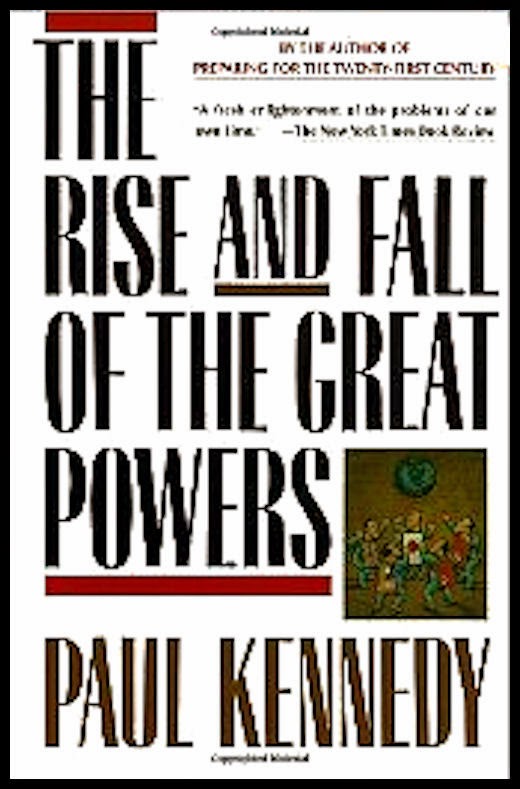
Books Worth Reading: THE RISE AND FALL OF THE GREAT POWERS by Paul KENNEDY

4 Alessandro-Bacci-Middle-East-Blog-Books-Worth-Reading-Kennedy-The-Rise-and-Fall-of-the-Great-Powers


THE RISE AND FALL OF THE GREAT POWERS

This book, by Paul Kennedy, first published in 1987, explores the politics and economics of the Great Powers from 1500 to 1980 and the reason for their decline. It then continues by forecasting the positions of China, Japan, the European Economic Community (EEC), the Soviet Union and the United States through the end of the 20th century.

Kennedy argues that the strength of a Great Power can be properly measured only relative to other powers, and he provides a straightforward and persuasively argued thesis: Great Power ascendancy (over the long term or in specific conflicts) correlates strongly to available resources and economic durability; military overstretch and a concomitant relative decline are the consistent threat facing powers whose ambitions and security requirements are greater than their resource base can provide for.

Throughout the book he reiterates his early statement: "Military and naval endeavors may not always have been the raison d'être of the new nations-states, but it certainly was their most expensive and pressing activity", and it remains such until the power's decline. He concludes that declining countries can experience greater difficulties in balancing their preferences for guns, butter and investments.


Books Worth Reading: THE CLASH OF CIVILIZATIONS AND THE REMAKING OF WORLD ORDER by Samuel P. HUNTINGTON

2 Alessandro-Bacci-Middle-East-Blog-Books-Worth-Reading-Huntington-The-Clash-of-Civilizations
 

THE CLASH OF CIVILIZATIONS AND THE REMAKING OF WORLD ORDER


Since its initial publication nearly fifteen years ago The Clash of Civilizations and the Remaking of World Order has become a classic work of international relations and one of the most influential books ever written about foreign affairs. An insightful and powerful analysis of the forces driving global politics, it is as indispensable to our understanding of American foreign policy today as the day it was published. 

As former National Security Adviser Zbigniew Brzezinski says in his new foreword to the book, it “has earned a place on the shelf of only about a dozen or so truly enduring works that provide the quintessential insights necessary for a broad understanding of world affairs in our time.”

Samuel Huntington explains how clashes between civilizations are the greatest threat to world peace but also how an international order based on civilizations is the best safeguard against war. Events since the publication of the book have proved the wisdom of that analysis. The 9/11 attacks and wars in Iraq and Afghanistan have demonstrated the threat of civilizations but have also shown how vital international cross-civilization cooperation is to restoring peace. As ideological distinctions among nations have been replaced by cultural differences, world politics has been reconfigured. Across the globe, new conflicts—and new cooperation—have replaced the old order of the Cold War era.


Books Worth Reading: REDEFINING GLOBAL STRATEGY by Pankaj GHEMAWAT

3 Alessandro-Bacci-Middle-East-Blog-Books-Worth-Reading-Ghemawat-Redefining-Global-Strategy
 

REDEFINING GLOBAL STRATEGY: CROSSING BORDERS IN A WORLD WHERE DIFFERENCES STILL MATTER

Why do so many global strategies fail—despite companies’ powerful brands and other border-crossing advantages? Seduced by market size, the illusion of a borderless, “flat” world, and the allure of similarities, firms launch one-size-fits-all strategies. 

But cross-border differences are larger than we often assume, explains Pankaj Ghemawat in Redefining Global Strategy. Most economic activity—including direct investment, tourism, and communication— happens locally, not internationally.

In this “semiglobalized” world, one-size-fits-all strategies don’t stand a chance. Companies must instead reckon with cross-border differences. Ghemawat shows you how—by providing tools for: 

- Assessing the cultural, administrative, geographic, and economic differences between countries at the industry level and deciding which ones merit attention.

- Tracking the implications of particular border-crossing moves for your company’s ability to create value.
       
- Creating superior performance with strategies optimized for adaptation (adjusting to differences), aggregation (overcoming differences), and arbitrage (exploiting differences), and for compound objectives.

In-depth examples reveal how companies such as Cemex, Toyota, Procter & Gamble, Tata Consultancy Services, IBM, and GE Healthcare have adroitly managed cross-border differences—as well as how other well-known companies have failed at this challenge.

Crucial for any business competing across borders, this book will transform the way you approach global strategy.


Books Worth Reading: HOW COUNTRIES COMPETE by Richard H. K. VIETOR

1 Alessandro-Bacci-Middle-East-Blog-Books-Worth-Reading-Vietor-How-Countries-Compete


HOW COUNTRIES COMPETE - STRATEGY, STRUCTURE, AND GOVERNMENT IN THE GLOBAL ECONOMY


Business and political leaders often talk about what their respective countries must do to compete in the world economy. But what does it really mean for a country to compete, and how do they do this successfully? As the world has globalized, countries develop strategies to compete for the markets, technologies, and skills that will raise their standards of living. These government strategies can make - or break - a nation's efforts to drive and sustain growth. In "How Countries Compete: Strategy, Structure and Government in the Global Economy", Richard Vietor shows how governments set direction and create the climate for a nation's economic development and profitable private enterprise.

Drawing on history, economic analysis, and interviews with executives and officials around the globe, Vietor provides rich and insightful examinations of different government approaches to growth and development - leading to both success and failure. Individual chapters focus on the unique social, economic, cultural, and historical forces that shape governments' approach to economic growth. The countries discussed include: China, India, Japan, Singapore, the United States Mexico, Russia, Saudi Arabia, and South Africa. Vietor challenges the widespread notion that, in market-driven economies such as the United States, a strong government can only hinder business success. A provocative account and a rich resource, "How Countries Compete" offers potent insights into how the business environment has evolved in crucial nations - and what its trajectory might look like in the future.


Books Worth Reading: THE NEW YORK TIMES MANUAL OF STYLE AND USAGE by Allan M. SIEGAL and William G. CONNOLLY

27 Alessandro-Bacci-Middle-East-Blog-Books-Worth-Reading-Siegal-Connolly-The-NYT-Manual-of-Style-and-Usage

 
THE NEW YORK TIMES MANUAL OF STYLE AND USAGE

Is the deejay a wannabe?
Or does the D.J. just want to be?
When is heaven capitalized?
Do you stand in line or on line?

For anyone who writes—short stories or business plans, book reports or news articles—knotty choices of spelling, grammar, punctuation, and meaning lurk in every line: Lay or lie? Who or whom? None is or none are? Is Touch-Tone a trademark? How about Day-Glo? It’s enough to send you in search of a Martini. (Or is that a martini?) Now everyone can find answers to these and thousands of other questions in the handy alphabetical guide used by the writers and editors of the world’s most authoritative newspaper.

The guidelines to hyphenation, punctuation, capitalization, and spelling are crisp and compact, created for instant reference in the rush of daily deadlines. This revised and expanded edition is updated with solutions to the tantalizing problems that plague writers in the new century:

* How to express the equality of the sexes without using self-conscious devices like “he or she.”
* How to choose thoughtfully between African-American and black; Hispanic and Latino; American Indian and Native American.
* How to translate the vocabulary of e-mail and cyberspace and cope with the eccentricities of Internet company names and website addresses.
With wry wit, the authors, who have more than seventy-five years of combined newsroom experience at the New York Times, have created an essential and entertaining reference tool.

According to Wikipedia:

The New York Times Manual of Style and Usage: The Official Style Guide Used by the Writers and Editors of the World's Most Authoritative Newspaper is a style guide created in 1950 by editors at the newspaper and revised in 1974, 1999, and 2002 by Allan M. Siegal and William G. Connolly. A revised and expanded paperback edition was published in 2002. According to the Times Deputy News Editor, Philip B. Corbett (who is in charge of revising the manual), there is a more current, online version of the manual that is used by Times staff, but this online manual is not available to the general public.


Books Worth Reading: THE GREAT CHESSBOARD by Zbigniew BRZEZINSKI

22 Alessandro-Bacci-Middle-East-Blog-Books-Worth-Reading-Brzezinski-The-Grand-Chessboard


THE GRAND CHESSBOARD


As the twentieth century draws to a close, the United States has emerged as the world’s only superpower: no other nation possesses comparable military and economic power or has interests that bestride the globe. Yet the critical question facing America remains unanswered: What should be the nation’s global strategy for maintaining its exceptional position in the world? Zbigniew Brzezinski tackles this question head-on in this incisive and pathbreaking book. The Grand Chessboard presents Brzezinski’s bold and provocative geostrategic vision for American preeminence in the twenty-first century. Central to his analysis is the exercise of power on the Eurasian landmass, which is home to the greatest part of the globe’s population, natural resources, and economic activity. 

Stretching from Portugal to the Bering Strait, from Lapland to Malaysia, Eurasia is the ”grand chessboard” on which America’s supremacy will be ratified and challenged in the years to come. The task facing the United States, he argues, is to manage the conflicts and relationships in Europe, Asia, and the Middle East so that no rival superpower arises to threaten our interests or our well-being. 

The heart of The Grand Chessboard is Brzezinski’s analysis of the four critical regions of Eurasia and of the stakes for America in each arena—Europe, Russia, Central Asia, and East Asia. The crucial fault lines may seem familiar, but the implosion of the Soviet Union has created new rivalries and new relationships, and Brzezinski maps out the strategic ramifications of the new geopolitical realities. He explains, for example: Why France and Germany will play pivotal geostrategic roles, whereas Britain and Japan will not. Why NATO expansion offers Russia the chance to undo the mistakes of the past, and why Russia cannot afford to toss this opportunity aside. Why the fate of Ukraine and Azerbaijan are so important to America. Why viewing China as a menace is likely to become a self-fulfilling prophecy. Why America is not only the first truly global superpower but also the last—and what the implications are for America’s legacy. 

Brzezinski’s surprising and original conclusions often turn conventional wisdom on its head as he lays the groundwork for a new and compelling vision of America’s vital interests. Once, again, Zbigniew Brzezinski provides our nation with a philosophical and practical guide for maintaining and managing our hard-won global power.