
BEIRUT, Lebanon
June 13, 2014
Dear friends,
Some people have asked me why on
the website "Alessandro Bacci's Middle East" I have decided to insert a
section called "Books Worth Reading," which is related to books
that I have read — for some of them it could more appropriate to say "books
that I have studied"— and that I deem relevant for a good understanding of
the "geopolitics of energy," especially in the Middle East. Now, with
these long-overdue few paragraphs, I would like to provide you with some
clarifications.
Reading is one of my
favorite hobbies. I am not one of those extremists who affirm that wise men
read while less wise men watch TV, films, and videos. However, I believe that, in
order to have a deeper understanding of any topics, reading is more powerful a
tool than just a simple video. The latter, of course, has a lot of pros as
well — be it clear, I greatly love TV, theater, and YouTube — and in my case, many
times video contents have played the role of sparking my interest about a
specific topic, whose knowledge I have later deepened through reading. Before, I
used to carry with me a lot paper books, while now I'm an enthusiast purchaser of
Kindle e-books.
The books that I have
inserted in this section cover different topics that are linked to the
geopolitics of energy in the Middle East. Surely, they mirror my personality,
my taste, and my interests. If you browse through the books you will see that
a majority of the titles are related to international law, economics,
business, and politics — all subjects that are part of my educational and
professional background. In addition to these four big categories, there are
also books concerning other fields like for instance, style and usage
(writing). In fact, after several years' worth of experience in the field of international
affairs, I am deeply convinced that the modern manager (as well as the modern
analyst, the modern adviser, the modern policy maker, or the modern
politician) has necessarily to be versed in all the different fields that
affect his decision-making process. In today's world, it's not anymore
conceivable to have managers who are not able to read a balance sheet or a
contract. Talking just for the pleasure of talking may give positive returns on
a short-term basis — it's a sort of commercial marketing — but in the long term it
does not provide the real key to durable success.
Summing up, I have inserted
books from different disciplines because I deeply believe that a good
professional needs to be versatile and open to learning from different fields
especially in light of today's mercurial international affairs environment. A
good professional has to be flexible enough in order to adapt to ever-changing
working environments, otherwise he will be lost. Some experts (Fernández-Aráoz,
2014) affirm that today, more than just simple skills, the most talented
professionals need to have "potential," the potential to learn new
skills. And indeed, good books may help the motivated, curious, and determined
professional to move along with the times.
Moreover, I think that
reading, together with writing and mathematics, is one of the three fundamental skills that every person
has to master. In this regard, the standardized U.S. tests for the enrollment
in tertiary-level academic courses (tests like for instance, the G.R.E. and the G.M.A.T.) well
cover these three skills, which are the building blocks on which we always have to rely on in order to carry out smart decisions. And my list of books goes toward this direction. I
still remember when at the high-school I studied for five years Ancient Greek
and Latin — which I have now partially forgotten. The idea behind the study of
those two old languages was not to learn something useful in my everyday's
life, but to widen my logical thinking skills at the linguistic level, which are
universally transferable to the study of other languages. All this said, if I'm
in Greece or Cyprus, I am still able to read road signs, but this is only a small
portion of the benefit that high-school training brought to me.
Last but not least, one
anecdote. Some years ago, because I was interested in obtaining a
degree with a prestigious academic institution, I had a meeting with a
professor with that school. He pointed out to me that my enrollment was difficult
because, according to their internal policy, they tended to admit only students
who had previously studied at that specific institution at the graduate level.
And then — I was in his office where there were books on many shelves — he raised
his arm and told me: "You see all those books? Well, here at this
institution we have the idea that although our students may not have read all
of them, at least they know about their existence and if they have to do a
research they know where to look for information." Was he right, was he
wrong? I still do not know. There was certain logic behind his words: The
school wanted to be sure of admitting only people with the requested credentials.
The problem is that I knew or I had read a lot of those titles. The sense of
this anecdote is that "Books Worth Reading" is my window for
showing the world what I deem important when we talk about the geopolitics of
energy in the Middle East, as if this section were the certificate of a program
that I have developed during the last years.
Some final points before
letting you go. The list is an open list, which means that as soon as I have read
something that I deem relevant, I will add it to the section. The majority of
the inserted publications are in English. Sometimes I have also inserted some
reports because in my opinion they are very relevant in their field and I have considered them as books. One last marginal note: For technical reasons all
books have the fictitious date of February 22, 2006.
Have a good reading!
Best regards,
Alessandro
LIST OF THE BOOKS WORTH READING
LIST OF THE BOOKS WORTH READING
ANDERSON, M., and WARNER, V., Drafting and Negotiating Commercial Contracts (2023)
CHAISSE, J., International Commercial Contracts (2025)
REINISCH, A., International Investment Law (2020)
GLOBAL ARBITRATION REVIEW, The Guide to Energy Arbitrations - Sixth Edition (2024)
CLEWS, P., Project Finance for the International Petroleum Industry (2016)
HEYCKE, J., Death, Taxes, and Turduckens (2025)
SALZGEBER, J., The Little Book of Stoicism (2019)
FISHMAN, E., Chokepoints: American Power in the Age of Economic Warfare (2025)
GOGGINS, D., Can't Hurt Me (2020)
LONGO, V., The Longevity Diet (2018)


LUFKIN, R., Lies I Taught in Medical School (2024)
WILKERSON, T., Put Option Profits (2025)
CHEN, D., and SEBASTIAN, M., The Option Trader's Hedge Fund (2012)

Monday, May 5, 2014
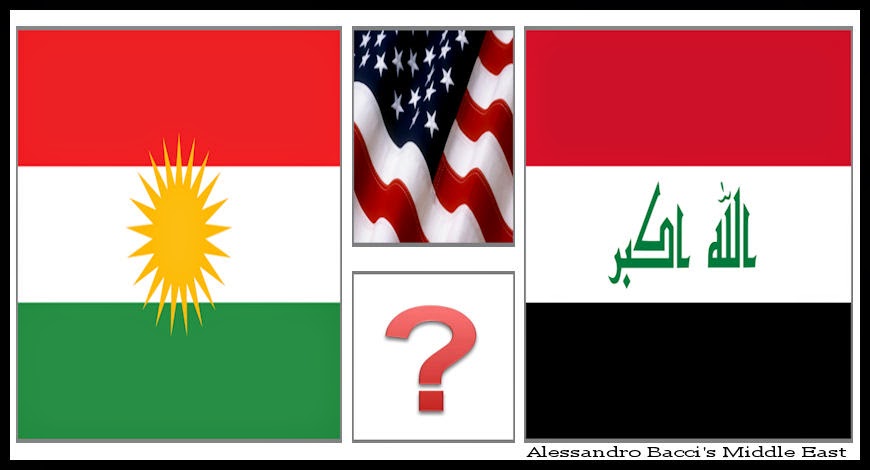
Confidential Memorandum (Fictional) — What Should the U.S. Position Be with Reference to the Current Tense Relations Between the K.R.G. and Iraq?
May 5,
2014
To: The U.S. Department of State
From: Alessandro
Bacci, Energy Analyst (Middle East)
Date: May 5, 2014
Subject: What Should the U.S. Position Be with Reference to the Current Tense Relations between the K.R.G. and Iraq?
BEIRUT, Lebanon — It is quite probable
that independently of the results of Iraq's April 30, 2014, parliamentary
elections and the subsequent political process of government formation, the
road for political stability will not be easy for Iraq. Whatever will be the
winning coalition — Prime Minister Nuri al-Maliki and his State of Law (SOL)
coalition are likely to obtain a good result — it will be difficult to stabilize
Iraq especially in a short- and medium-term horizon. With reference to the Iraqi
Kurdish-Iraqi tense relations, which have worsened because Erbil intends to
export its energy riches independently of Baghdad's authority, it is not easy
to find a possible compromise. In addition, given this current standoff between
Erbil and Baghdad, the former started to voice more loudly that energy
revenues could permit the K.R.G. to secede from proper Iraq.
The U.S., for the
time being, should continue not to favor any of the two involved actors. In fact, at the international level, the U.S. has
always favored and prioritized political stability, from which it benefits
greatly. The U.S. classic approach in a secessionist crisis consists of
supporting "initially" the central states, which face a possible
secession, and of shifting "only in a second time" the American
support toward those secessionist movements that are able to guarantee
the country's stability in the long run. This approach could work for Iraq as well.
Instead, favoring Erbil or Baghdad could have unintended consequences, which
are difficult to predict, at least for now. At this time, any U.S. direct
involvement would be premature, especially in light of the fact that the K.R.G.
is an autonomous region within Iraq and that as of yet it has not implemented
any real secessionist activities. In practice, not choosing now one of the two
sides could permit more leverage in the future.
MAIN ACTORS IN THE
DISPUTE BETWEEN THE K.R.G. AND IRAQ
In addition to the two
main actors, which are of course the K.R.G. and Iraq,
there are four additional players with stakes in the dispute. They are: the United States, Turkey, Iran and Saudi Arabia.
- The K.R.G. wants at least more economic resources from Baghdad. Erbil is entitled to receive 17 percent of Iraq's national budget, but according to some Kurdish officials, in the past Baghdad paid only a little over 10 percent. Probably, the paid percentage should be around 14 percent, meaning approximately $15 billion. Political independence/the right of self-determination for the K.R.G. could be the step that follows an economic independence, which could be obtained through the direct export of Kurdish oil and gas reserves—with no ingerence from the federal government. Summing up, the failure of a democratic and unified Iraq, relevant export revenues through the northern export corridor and significant water resources could really push Erbil towards declaring secession.
- Iraq needs to use all its efforts to maintain the control of the hydrocarbons present within the Iraqi territory, Iraqi Kurdistan included. Losing the control of the oil and gas reserves located in the K.R.G. would have relevant economic consequences for a country whose oil industry traditionally accounts for 95 percent of the government's revenues. Moreover, a possible secession of the K.R.G. could start a process of complete fragmentation of Iraq — which is already a country divided along sectarian lines: in the north the Kurds, in the south the Shiites and in the central western Iraq the Sunnis — where Baghdad could become a city-state.
- After the December 2011 withdrawal, the U.S. has seen its influence in Iraq partially reduced, but the U.S. is still the main trading partner of Iraq (25 percent of total exports and 6 percent of total imports). U.S. major oil companies play a relevant role in Iraq (ExxonMobil, Occidental Petroleum) as well as in the K.R.G. (ExxonMobil and Chevron). Political stability is America's main goal in the Middle East, which de facto is the cauldron of the rivalry between Shiites and Sunnis. With Syria on the path to being a broken state, the U.S. cannot accept the collapse of Iraq and the possible resurgence of Islamic fundamentalism across the Middle East.
- In the last years, Turkey has gained political authority in the Middle Eastern chessboard. The country has become an economic regional powerhouse and in consideration of its ballooning $60 billion energy bill (presently, it imports 92 percent of its oil and 98 percent of its gas) it is deeply interested in the K.R.G.'s energy riches. Erbil could also be a way to diversify from Russia and Iran. The Kurds have completed their own independent pipeline (the existing capacity is 300,000 barrels per day) from the Taq Taq oil field to Fishkhabur, close to the Turkish border. From there oil enters the Kirkuk–Ceyhan Pipeline and continues to Ceyhan. Ankara would like to avoid endangering its relations with Baghdad, but it is already a major investment and trading partner of the K.R.G.
- Iran is the most influential foreign actor involved in the internal politics of Iraq. Tehran wants to preserve and expand the influence that it has gained after the fall of Saddam Hussein in all Iraq and to avoid any new sectarian Sunni-Shiite war. While Iran is boosting its economic relations and ties (pipelines) with the K.R.G., at the same time it fears a possible independence of the K.R.G. Such independence could provoke a messy fragmentation of Iraq where southern Iraq (and its oil reserves) will lean toward Iran, but while at the same time central western Iraq will become a stronghold of Sunni extremism — indeed, an outcome that Tehran wants to avoid.
- Since the 2003 regime change in Iraq, Saudi Arabia has opposed the Shia-dominated government in Baghdad and Mr. al-Maliki, in particular, whom Saudi Arabia sees as a sectarian leader. Riyadh fears that if the Kurds become independent, Iraq will be divided into three parts, of which southern Iraq, which is Shia-dominated and owns important oil riches, will end up under the Iranian sphere of influence. And later, southern Iraq could incite Shia people in Saudi Arabia and other Gulf countries against their rulers. Moreover, Saudi Arabia has no interest in seeing either the K.R.G. to develop as an energy hub or Iraq to become a swing producer menacing Saudi Arabia's role within OPEC. However, would an independent K.R.G. be part of OPEC?
THE DRIVING FORCES
The driving forces that
have an impact on the dispute are three: the K.R.G.'s energy riches, Prime Minister Nuri al-Maliki of Iraq and the conflict in
Syria.
- The K.R.G.'s energy riches are the tool that could permit Erbil to declare independence. Current data speak about 45 billion barrels of oil, i.e., one-third of Iraq's proven reserves, which are estimated at 143 billion barrels. In addition to oil, the K.R.G. has from 3 trillion cubic meters to 6 trillion cubic meters of potential gas reserves. The relations between Erbil and Baghdad have worsened since U.S. oil super major, ExxonMobil decided to start negotiating drilling contracts directly with the K.R.G. in 2011. On the one side, Baghdad affirms that it alone has the right to negotiate and sign energy deals for the whole territory of Iraq, the K.R.G. included. On the other side, Erbil insists that Iraq's constitution allows it to agree to contracts and, as a result, to ship oil independently of the central government. The legal framework is not clear while it is open to divergent interpretations. Once the K.R.G. production overpasses 500,000 barrels per day (right now its production hovers around 255,000 barrels per day) Erbil would be better off selling autonomously its oil than waiting for the 17 percent (or 14 percent) of Iraq's national budget.
- Notwithstanding the fact that, incumbent Prime Minister Nuri al-Maliki with his coalition will probably emerge as the largest winner in the election and that he will probably win a third term as prime minister, Mr. al-Maliki is a controversial figure. His re-election in 2010, as well as the refusal to call for a vote of no-confidence against him in 2012, was linked to strong Iranian support. However, at the same time, considering al-Maliki responsible, in light of his authoritarian methods, for the worsening of the ethnic tensions in Iraq, Iran would probably like to have an alternative — not available now — to Mr. al-Maliki, who defines himself more of a nationalist than just a Shia Muslim, and who is definitely not a puppet in Iranian hands. If re-elected he should transform his leadership from a divisive one into an inclusive one.
- Syria, which since March 2011 has been experiencing an armed conflict between forces loyal to President al-Assad and anti-government groups that want to oust him, is indeed a destabilizing driving force in the region (especially in Lebanon and Iraq, the K.R.G. included). The relations between Baghdad and Damascus have recently improved in light of the growing danger of the Islamic fundamentalism in both countries. On the one side, a long-lasting civil war in Syria with the possibility of the fragmentation of Syria into three states along sectarian lines (Sunni, Shia and Alawite) could set the precedent for Iraq, which would follow suit. On the other side, for the time being, internal Kurdish rivalries have prevented Iraqi Kurds from adopting a common policy to help Syrian Kurds. In specific, the president of the K.R.G., Massoud Barzani cannot send fighters to the Syrian theater to help Syrian Kurds against the al-Assad regime because such a move would engender some problems with Iran.
 |
| Source — The New York Times (September 2013) |
THE TWO MOST CRITICAL UNCERTAINTIES
The two most critical uncertainties are:
- 1) Whether the K.R.G. becomes independent or it continues to be a semi-autonomous region of Iraq. Economically speaking, in a short to medium time-frame the K.R.G. will be able to produce and export approximately 500,000 barrels per day, which are the barrels required to match the national budget quota Erbil receives from the federal government. In other words, the call for independence is getting stronger in Erbil — the K.R.G. is de facto autonomous. What is difficult to imagine is how the K.R.G. may be independent without creating a domino effect, which could bring about the fragmentation of Iraq and an epochal transformation of the Middle Eastern borders. An Iraq formed by only southern Iraq (Shia), central and western Iraq (Sunni) and Baghdad as a city-state has very few chances to exist. As further proof of this difficult and precarious Iraqi political equilibrium, the 2010 elections are a good memento. In fact, in that occasion Mr. al-Maliki came in second to candidate Ayad Allawi and his Iraqiya list and only with the suport of the Kurds, Iran and the U.S. Mr. al-Maliki was able to form a government.
- 2) Whether the new Iraqi government is able to implement a political action aimed at unifying the country and not at dividing Iraq along sectarian lines? The winner of the 2014 elections will have to find a formula to implement a cross-sectarian policy. In other words, he will have to move from Mr. al-Maliki's current exclusionary practices to practices involving reconciliation and inclusiveness between the different ethnic groups. Is such a task doable? It is very difficult. Firstly, because it seems that Mr. al-Maliki will be the winner of the 2014 general elections. Moreover, Mr. al-Maliki since the American departure in December 2011 has implemented a policy of strong confrontation against the Sunny community and against the Kurds. Secondly, because it is not clear yet how many seats SOL will obtain — the majority to form a government is 167 seats. If SOL gets 60-90 seats, it's expected a long period of government formation — also in this case SOL's goal will be to obtain the post of prime minister — during which Mr. al-Maliki will act as caretaker prime minister. Instead, if SOL gets 90 seats or more, the process of government formation will be faster. In addition, this second scenario does not guarantee a reduction of Mr. al-Maliki's current political radicalization. In fact, an important victory could be understood as a mandate to crush the Sunni opposition with the result of increasing the onset of a new civil war.
FINAL RECOMMENDATION
Indeed, the U.S. is
able either to favor the independence of the K.R.G. or to maintain the current
status quo with the integrity of Iraq's territory. Nevertheless, it is
not in the interest of the U.S. to take either decision given the current
state of the affairs. The involved risks are too high. It is true that some American oil companies are
operating in Iraq and/or the K.R.G., but these are I.O.C.s and not N.O.C.s so the U.S. government does not have the authority to direct their
investments when they operate in foreign countries. Moreover, the U.S., which
has historically imported from the Middle East no more than 15 percent of its oil
supply (today 9 percent of its oil supplies) should perceive the importance of
the stability of Iraq not for the oil supplies directed to the U.S., but for
the overall stability of the Middle East. In fact, notwithstanding an American
presence in Iraq from March 2003 to December 2011, Iraq is still on the
verge of fragmentation. The U.S. has the power to sponsor the
K.R.G.'s independence or Iraq's unity, but it does not have the power to
stabilize a region where too many unintended consequences might soon emerge. If
America's goal is the stability of the Middle East, it suits America a
wait-and-see approach with reference to the quarrel between the K.R.G. and
Iraq.
Subscribe to:
Posts (Atom)